How to Avoid Credit Card Quasi-Cash Fees (MCC 6051) When Funding Your Crypto Card
The Hidden Tax on Crypto Purchases: Understanding Quasi-Cash Fees
For cryptocurrency enthusiasts, buying digital assets or funding a crypto card has often felt like an obstacle course. You connect your card to an exchange, purchase crypto, and later discover a frustrating surprise: an extra 3% to 5% charge on your statement labeled as a "cash advance" or "quasi-cash fee."
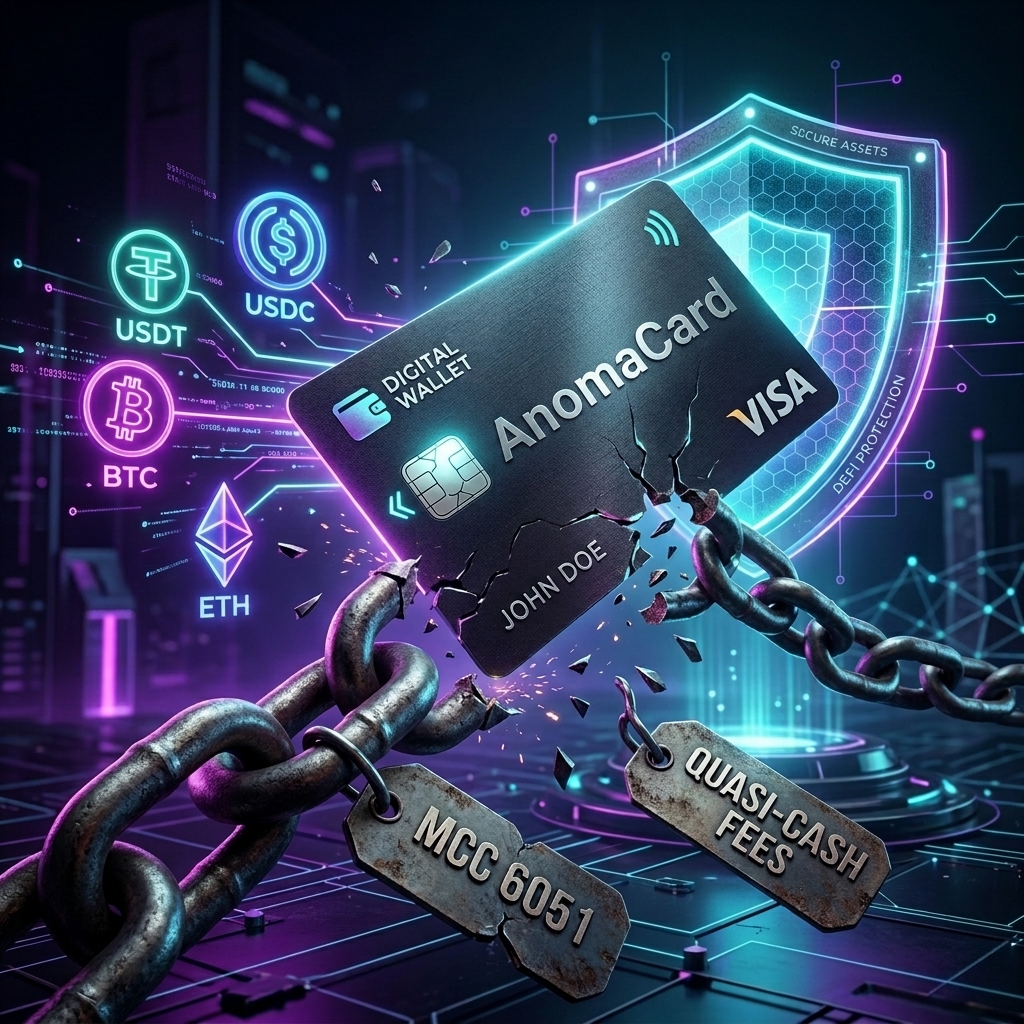
This fee is not charged by the crypto platform or the exchange. It is a penalty levied directly by your traditional banking institution. In the traditional financial system, transactions are categorized using a standard system of codes. When you purchase digital assets or fund a wallet using a credit card, the transaction is tagged with Merchant Category Code (MCC) 6051. Under this classification, your bank treats the purchase not as a standard retail transaction, but as a cash-like transaction.
For cardholders looking to manage their ad spend, travel costs, or daily shopping using cryptocurrency, these fees are a massive drain. Paying an extra 3% to 5% on every transaction ruins the financial benefits of using crypto in the first place. In this guide, we will explore exactly what MCC 6051 quasi-cash fees are, why traditional card issuers charge them, and how you can bypass them entirely using direct on-chain stablecoin funding.
What is MCC 6051 and Why Do Banks Charge It?
Every merchant accepting card payments is assigned a four-digit Merchant Category Code (MCC) by processors like Visa and Mastercard. This code identifies the merchant's business type to the bank.
MCC 6051 is designated for "Non-Financial Institutions – Foreign Currency, Liquid Assets, and Money Orders." In simple terms, it represents "quasi-cash" transactions. Quasi-cash refers to items that are directly or easily convertible into cash. This category includes:
- Casino gaming chips and lottery tickets
- Traveler's checks and money orders
- Wire transfers and peer-to-peer money transfers
- Cryptocurrency purchases and funding digital wallets
When flagged under MCC 6051, issuers treat the transaction as a cash advance. This triggers two immediate penalties: a flat or percentage fee (typically 3% to 5%), and the immediate accrual of high-interest rates from the millisecond the transaction is approved, bypassing standard interest-free grace periods.
How Traditional "Crypto Cards" Fail to Protect You
Many users assume that using a dedicated "crypto debit card" (such as the cards offered by Coinbase, Crypto.com, or other custodial platforms) protects them from these fees. However, this is often not the case. The issue lies in how you fund these custodial cards.
Most custodial card issuers require you to deposit fiat currency into their platform before you can spend. If you fund your card balance using a traditional credit card or debit card, the deposit platform processes the payment under MCC 6051, triggering the cash advance fee. Even if you link your bank account directly via ACH or wire transfer to avoid the card fee, the process can take several business days, limiting your flexibility. Marketers, agencies, and travelers who need immediate card access are often forced to use card top-ups, incurring massive fees over time.
Furthermore, because custodial cards are deeply integrated into the traditional banking system, they must comply with strict regional payment filters. If your bank suspects you are funding a crypto card to interact with decentralized finance (DeFi) applications or private protocols, they may block the transaction entirely, freeze your bank account, and demand proof of funds.
The Ultimate Bypass: Direct On-Chain Stablecoin Funding
The only reliable way to bypass bank quasi-cash charges and avoid MCC 6051 fees entirely is to remove the traditional banking middleman from the funding equation. Instead of using a credit card to purchase fiat or load a custodial card account, you should fund your spending card using direct on-chain crypto transfers.
By using stablecoins like USDT or USDC that you already hold in your self-custody wallet, you completely bypass credit card networks. Because you are sending a standard blockchain transaction from your personal wallet to your card's smart contract, no credit card processor is involved. There are no billing addresses to verify, no banks to flag the transfer, and absolutely no quasi-cash fees. You are spending your own digital assets on your own terms.
How AnomaCard Bypasses MCC 6051 Fees Instantly
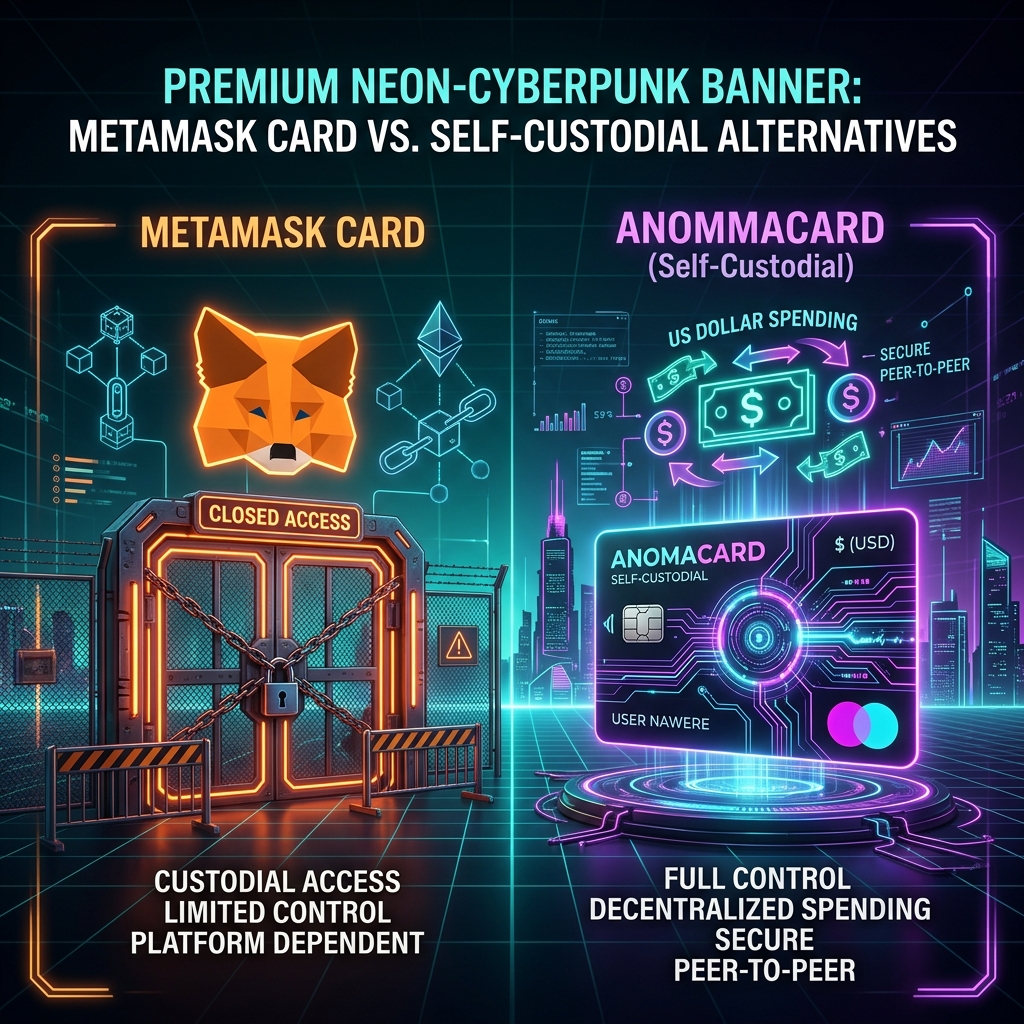
AnomaCard is designed specifically to help users escape the high fees and compliance bottlenecks of traditional banking rails. As a non-custodial virtual debit card, AnomaCard allows you to fund your card directly using stablecoins, avoiding the traditional credit card top-up loop entirely.
AnomaCard operates under a privacy-first, decentralized framework. There are no credit history checks, bank statements, or invasive KYC procedures. You do not need to link a bank account or use a credit card. By utilizing direct on-chain stablecoin deposits, AnomaCard ensures you buy crypto and spend it without cash advance fees. Because AnomaCard converts your stablecoins to fiat in real-time at the exact moment of a purchase, your funds remain in your custody until they are spent.
Step-by-Step Guide: Funding AnomaCard Without Fees
Setting up and funding your AnomaCard to bypass quasi-cash fees takes less than two minutes:
- Connect Your Web3 Wallet: Navigate to the official AnomaCard site. Connect your preferred self-custody wallet (such as MetaMask, Rabby, Ledger, or Trezor). No registration or email is required.
- Fund with Stablecoins On-Chain: Choose your cryptocurrency (USDT or USDC) and the blockchain network. AnomaCard supports low-fee networks like Arbitrum, Solana, and BSC. Transfer the desired amount from your wallet directly to the card contract.
- Instantiate Your Virtual Card: As soon as the transaction is confirmed on the blockchain, your virtual card is created instantly. You receive a unique card number, expiry date, and CVV.
- Add to Apple Pay or Google Pay: Link the card details to your mobile wallet. You can now make contactless payments or shop online globally, with zero bank involvement and zero quasi-cash fees.
Why AnomaCard is the Best Alternative for Crypto Spenders
AnomaCard is the ultimate tool for avoiding MCC 6051 charges while retaining privacy:
- No Banking Middlemen: Funding is 100% on-chain, meaning no bank can charge you a cash advance fee or block your transaction.
- Premium Acceptance: AnomaCard uses high-quality corporate BINs, ensuring your card is accepted worldwide by merchants, ad networks, and travel platforms.
- VIP Fee Efficiency: Our lifetime VIP fee system drops your top-up fee from 0.60% down to 0.30% as you accumulate volume, saving you hundreds of dollars compared to the 5% quasi-cash fee.
- Absolute Privacy: Since no personal data is collected or linked to your card, your spending habits remain private.
Conclusion: Stop Paying the Bank's Crypto Tax
Traditional banks view cryptocurrency as a threat to their business model, which is why they penalize users with cash advance and quasi-cash fees under MCC 6051. There is no reason to pay a 3% to 5% penalty just to access your own digital wealth.
By switching to AnomaCard's self-custodial virtual cards, you bypass the traditional banking infrastructure entirely. Stop paying the bank's crypto tax and start spending your assets freely, privately, and without fees today.
Ready to take control of your financial privacy?
Order Your Anonymous Card NowAnomaCard Protocol
Verified ResearchPublished by the AnomaCard Research Protocol. Focused on decentralized financial privacy, self-custodial architecture, and zero-KYC payment solutions.