Can My Bank Freeze My Crypto? How to Avoid Centralized Banking Risks

The Illusion of Complete Financial Freedom in Crypto
Cryptocurrency was built on a foundational promise: the absolute decentralization of finance. The mantra 'not your keys, not your coins' has been drilled into the mind of every serious investor. Yet, a stark reality often shatters this illusion for many when it comes time to convert those digital assets back into usable fiat currency. You may hold your Bitcoin or Ethereum in a secure, non-custodial hardware wallet, but the moment you attempt to transfer those funds through a traditional, centralized banking institution or a highly regulated Centralized Exchange (CEX), you subject yourself to the arbitrary rules of the legacy financial system. The simple, alarming answer to the question, 'Can my bank freeze my crypto?' is a resounding yes. In fact, it happens with alarming frequency. Banks around the world are increasingly scrutinizing, flagging, and outright freezing accounts that interact with cryptocurrency exchanges. In this comprehensive guide, we will explore exactly why traditional banks are hostile toward crypto, the immense risks of relying on centralized banking infrastructure, and how you can completely circumvent these dangers using modern, privacy-focused off-ramps like AnomaCard to maintain your financial sovereignty.
Why Do Banks Freeze Accounts Associated With Crypto?
To understand how to protect yourself, you must first understand the mechanisms that banks use to monitor your financial behavior. Traditional banks operate under a labyrinth of international regulations, primarily focused on Anti-Money Laundering (AML) and Know Your Customer (KYC) compliance. These institutions utilize aggressive, automated algorithms designed to detect 'suspicious' activity. Unfortunately, the traditional banking sector largely views cryptocurrency as inherently suspicious. When you transfer funds to or from a crypto exchange, these automated systems often trigger red flags.
- Algorithmic Suspicion: Banks use pattern-matching software that automatically flags accounts showing large, sudden inflows from known cryptocurrency exchanges (like Binance, Coinbase, or Kraken). Even if your funds are perfectly legal, the software does not care; it freezes the account pending manual review.
- Strict AML/KYC Enforcement: If a bank suspects that the source of your funds cannot be easily verified according to their rigid, archaic standards, they are legally obligated to freeze your assets and potentially report you to financial authorities. Proving the legitimacy of crypto trading profits can be an agonizing, month-long process involving endless paperwork.
- Institutional Hostility: Beyond regulation, many major banks simply view decentralized finance as an existential threat to their business model. They have internal policies that explicitly prohibit transactions related to cryptocurrency, giving them the right to terminate your account without notice.
The Hidden Dangers of Centralized Exchanges (CEXs)
Many crypto users believe they are safe because they use mainstream, regulated centralized exchanges. However, modern CEXs have essentially become extensions of the traditional banking system. When you leave your assets on a platform like Coinbase or Binance, you are subject to the same systemic risks as a bank, but often with even less consumer protection.
- Arbitrary Account Suspensions: Just like banks, centralized exchanges employ automated risk engines. A simple login from a new IP address, a VPN, or a withdrawal to an 'unknown' wallet can trigger an immediate freeze of all your assets.
- The Honeypot Effect: Centralized exchanges hold billions of dollars in custodial wallets, making them massive targets for hackers. If the exchange is compromised, or if it faces a liquidity crisis (as seen with FTX), your funds are gone, and you are left as an unsecured creditor in a bankruptcy proceeding.
- Data Harvesting and Privacy Loss: To use a CEX, you must surrender your identity, passport, address, and facial biometric data. This data is stored indefinitely and is frequently shared with third-party analytics firms and tax agencies, completely destroying the privacy that crypto was meant to provide.
How to Protect Your Wealth and Avoid Centralized Risks
To truly protect your assets from sudden freezes, arbitrary seizures, and invasive surveillance, you must decouple your wealth from centralized choke points. This requires a shift in how you store, manage, and spend your cryptocurrency.
- Embrace Self-Custody: The first step is moving your assets off centralized exchanges and into non-custodial hardware wallets. You must be the sole possessor of your private keys. This guarantees that no exchange can freeze your funds or halt your withdrawals.
- Utilize Decentralized Finance (DeFi): Instead of using CEXs to trade, utilize Decentralized Exchanges (DEXs) like Uniswap or 1inch. These platforms operate via smart contracts, requiring no KYC and offering no central authority capable of freezing your trades.
- Cut the Cord to Traditional Banks: The most critical step is finding an off-ramp that does not rely on wiring funds to your personal bank account. As long as a traditional bank is the final destination for your fiat, you are vulnerable to algorithmic freezes and account closures.
AnomaCard: The Ultimate Solution for Anonymous Crypto Off-Ramping
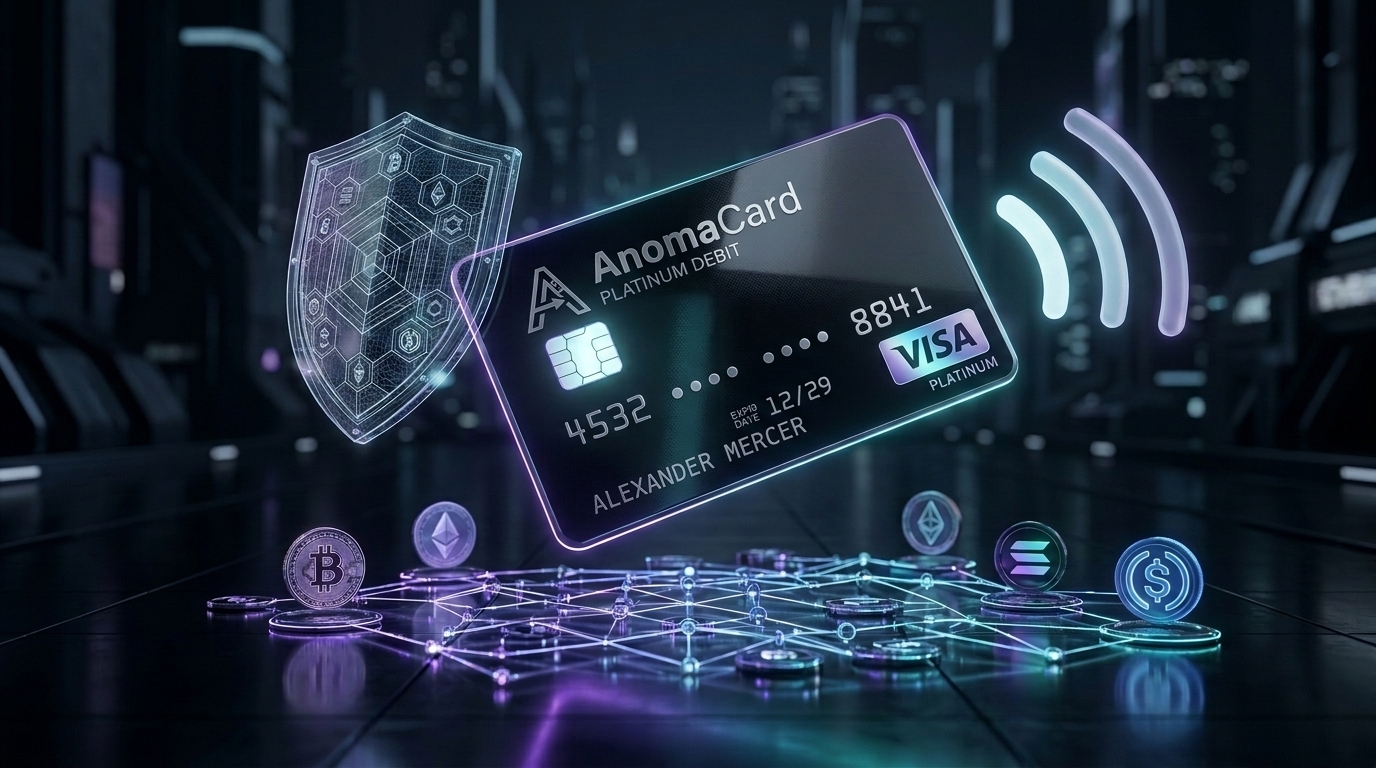
If routing your crypto profits through a traditional bank is a massive risk, how do you spend your digital wealth in the real world? The answer is AnomaCard. AnomaCard represents the pinnacle of financial privacy, offering a completely anonymous, secure, and borderless way to convert your cryptocurrency into spendable fiat without ever interacting with a centralized bank account.
- Absolute Anonymity (No KYC Required): Unlike traditional bank cards or exchange-issued debit cards that demand your passport and utility bills, AnomaCard requires zero personal information. No name, no address, no ID verification. Your financial life remains entirely private, protecting you from data breaches and surveillance.
- Immunity to Bank Freezes: Because AnomaCard operates independently of your personal banking infrastructure, there is no traditional bank account linked to your name that can be frozen. You load the card directly with crypto, and it is instantly converted to spendable balance. No AML algorithms can lock you out of your own money.
- Global Acceptance and Cash Withdrawals: AnomaCard functions flawlessly anywhere major credit cards are accepted worldwide. Whether you are buying groceries, booking flights, or paying for software, it works seamlessly. Furthermore, you can withdraw cash from virtually any ATM globally, allowing you to move completely off-grid.
- Unmatched Security and High Limits: AnomaCard is designed for serious crypto users. It features exceptionally high loading and spending limits, accommodating everyone from casual users to high-net-worth individuals. Your funds are secured through advanced cryptographic protocols, ensuring that your privacy never comes at the expense of security.
Reclaim Your Financial Sovereignty
The traditional banking system is fundamentally incompatible with the ethos of cryptocurrency. By relying on legacy banks and centralized exchanges, you are playing a dangerous game where your hard-earned assets can be frozen, seized, or heavily restricted at a moment's notice based on automated algorithms and invasive KYC regulations. True financial freedom means taking total control of your wealth from end to end. By securing your assets in a hardware wallet and utilizing AnomaCard as your dedicated off-ramp, you completely bypass the risks of centralized banking. AnomaCard provides the missing link in the crypto ecosystem: the ability to spend your digital wealth privately, securely, and seamlessly in the real world, without asking for permission. Stop risking your funds with institutions that view you with suspicion. Embrace the true power of decentralized finance and secure your financial autonomy today.
Ready to take control of your financial privacy?
Order Your Anonymous Card NowAnomaCard Team
Verified ResearchPublished by the AnomaCard Research Protocol. Focused on decentralized financial privacy, self-custodial architecture, and zero-KYC payment solutions.