Best Non-Custodial Crypto Cards for European Residents (Post-MiCA 2026)
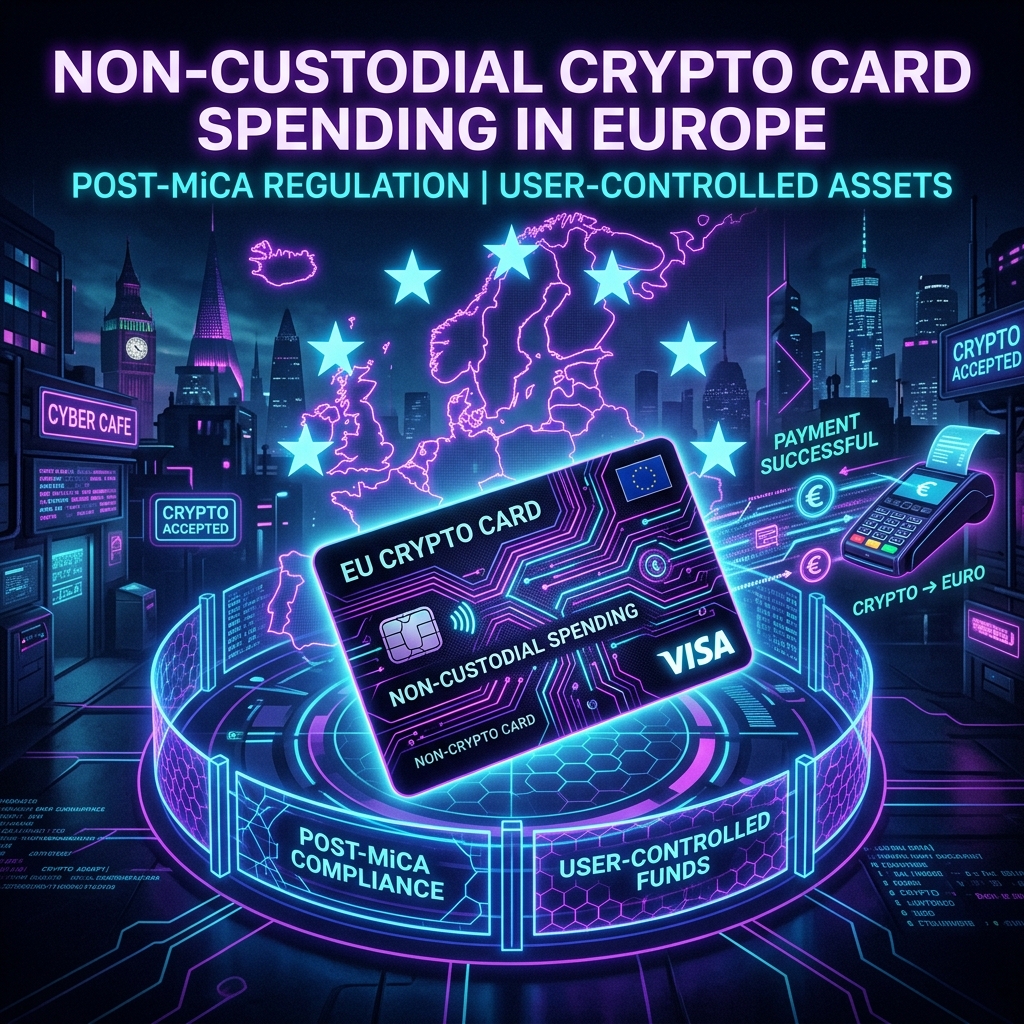
The New Era of European Crypto: Navigating Post-MiCA 2026
The European cryptocurrency landscape has undergone a monumental shift. The full enforcement of the Markets in Crypto-Assets (MiCA) regulation has redefined how digital assets are managed, traded, and spent across the European Economic Area (EEA). While regulators promise that these guidelines bring stability and legitimacy to the sector, the reality for everyday crypto users is far more restrictive. Financial privacy is under siege, and the convenience of spending digital assets has been overshadowed by new compliance barriers.
For years, European crypto enthusiasts relied on centralized custodial debit cards to off-ramp assets instantly. In the post-MiCA environment of 2026, however, these cards have transformed into tools of intensive surveillance, subject to intrusive Know Your Customer (KYC) demands and arbitrary account freezes. This has driven a massive surge in demand for self-custodial alternatives that prioritize user sovereignty.
If you are a European resident seeking to protect your financial freedom, this guide analyzes the best non-custodial crypto cards in 2026. We examine the post-MiCA legal realities, explain the differences between card architectures, and demonstrate why AnomaCard is the premier self-custodial choice.
The MiCA Regulatory Crackdown and Its Impact on Cards
The Markets in Crypto-Assets (MiCA) framework introduces strict Anti-Money Laundering (AML) and Counter-Terrorist Financing (CTF) protocols across the EU. In 2026, compliance is mandatory for any platform serving European residents.
One of the most disruptive aspects of MiCA is the implementation of the "Travel Rule" for all digital asset transfers. Under this rule, service providers must collect and verify personal information for both the sender and receiver of every transaction. This requirement effectively eliminates the possibility of anonymous transactions through regulated entities. Additionally, the regulation has placed severe restrictions on custodial card issuers, forcing them to implement continuous monitoring and automatic reporting of user activities to national tax authorities.
- End of Basic Verification: Low-tier accounts are outlawed. Every user must undergo full identity, biometric, and address verification.
- Algorithmic Freezes: Centralized exchanges employ hyper-sensitive risk algorithms. A transfer from a self-custody wallet can trigger an immediate account freeze.
- Centralized Reporting: Every card transaction is automatically reported to European tax authorities, eliminating transaction privacy.
Custodial vs. Non-Custodial Cards: The Critical Legal Difference
To navigate this new regulatory environment, it is essential to understand the technical and legal distinction between custodial and non-custodial crypto cards. This structural difference determines who controls your funds and how much privacy you can maintain.
Custodial Crypto Cards: When you use a custodial card, you do not own the underlying cryptocurrency. The issuing centralized exchange or custodian holds the private keys to your wallet. The digital assets shown in your app are merely an IOU. When you make a purchase, the exchange converts your assets to fiat and processes the payment. Because the exchange holds the custody of your funds, it acts as a regulated financial intermediary. This status subjects them to the full weight of MiCA compliance, meaning they must track your assets, enforce transaction limits, and suspend your access at the request of any government agency.
Non-Custodial (Self-Custodial) Crypto Cards: In contrast, a non-custodial card allows you to retain absolute ownership of your digital assets. You hold the private keys to your wallet, and your funds remain on-chain until the exact moment of transaction. A non-custodial card provider does not hold your funds in a centralized account. Instead, the card connects directly to your self-custody wallet (such as MetaMask, Phantom, Ledger, or Trust Wallet). You only transfer the necessary amount of crypto to load onto the card when you intend to spend it. Because there is no centralized intermediary holding your lifetime savings, you are insulated from exchange bankruptcies, custodial freezes, and the invasive surveillance mandated by MiCA for centralized custodians.
Why Self-Custodial Debit Cards are Essential in 2026
The transition to self-custodial debit cards is a fundamental strategy for preserving your financial sovereignty. By eliminating the centralized custodian, European residents can bypass the primary points of vulnerability in the modern financial system.
First, non-custodial cards offer unmatched security. When you store your crypto on a centralized exchange to back a custodial card, you are exposed to the risk of platform insolvency or hacking. With a non-custodial card, your main capital remains secured in your cold storage or private software wallet. You only interact with the payment network when you choose to load funds onto the card.
Second, these cards provide robust protection against arbitrary account freezes. Traditional banks and custodial crypto platforms regularly lock accounts due to false positives generated by automated compliance systems. Resolving these freezes can take weeks or months of document submissions. A non-custodial card avoids this risk because the provider does not have the legal or technical ability to lock your underlying Web3 wallet.
Finally, self-custodial debit cards protect your privacy. By avoiding centralized databases that link your real-world identity to every minor on-chain transaction, you reduce your exposure to identity theft, database leaks, and corporate surveillance. You maintain the ability to spend your hard-earned assets without exposing your entire financial history to third parties.
AnomaCard: The Premier Non-Custodial Solution for Europeans
Among the emerging class of decentralized payment options, AnomaCard stands out as the best crypto card for Europeans 2026. Designed with a privacy-first, non-custodial architecture, AnomaCard enables European residents to spend their cryptocurrency globally without compromising their financial sovereignty.
AnomaCard connects directly to your preferred Web3 wallet, allowing you to load your card with top stablecoins like USDT and USDC, as well as major cryptocurrencies on low-fee networks. The platform supports multiple blockchains, including Solana, Arbitrum, Polygon, and BNB Chain, ensuring fast transaction speeds and minimal gas fees. Once funded, your AnomaCard virtual card can be instantly integrated with Apple Pay or Google Pay, allowing for seamless contactless payments at millions of physical and online merchants worldwide.
The key features that make AnomaCard the ultimate post-MiCA crypto cards choice include:
- No Centralized Custody: Your digital assets remain in your private wallet until you decide to load them onto the card. There is no risk of exchange insolvency affecting your main holdings.
- Zero KYC Verification: AnomaCard respects your fundamental right to privacy. You can generate a virtual debit card without submitting passports, utility bills, or facial scans.
- High Acceptance Rates: By utilizing premium business-class BINs, AnomaCard ensures that its cards are accepted globally by major merchants, subscriptions, and ad networks, avoiding the declines common with low-tier prepaid cards.
- Optimized Fees: AnomaCard features a competitive fee structure, with loading fees decreasing as your spending volume increases, making it a highly cost-effective off-ramp option.
By choosing AnomaCard, European residents can confidently navigate the strict regulatory environment of 2026 while maintaining the privacy, security, and control that cryptocurrency was originally designed to provide.
Ready to take control of your financial privacy?
Order Your Anonymous Card NowAnomaCard Protocol
Verified ResearchPublished by the AnomaCard Research Protocol. Focused on decentralized financial privacy, self-custodial architecture, and zero-KYC payment solutions.