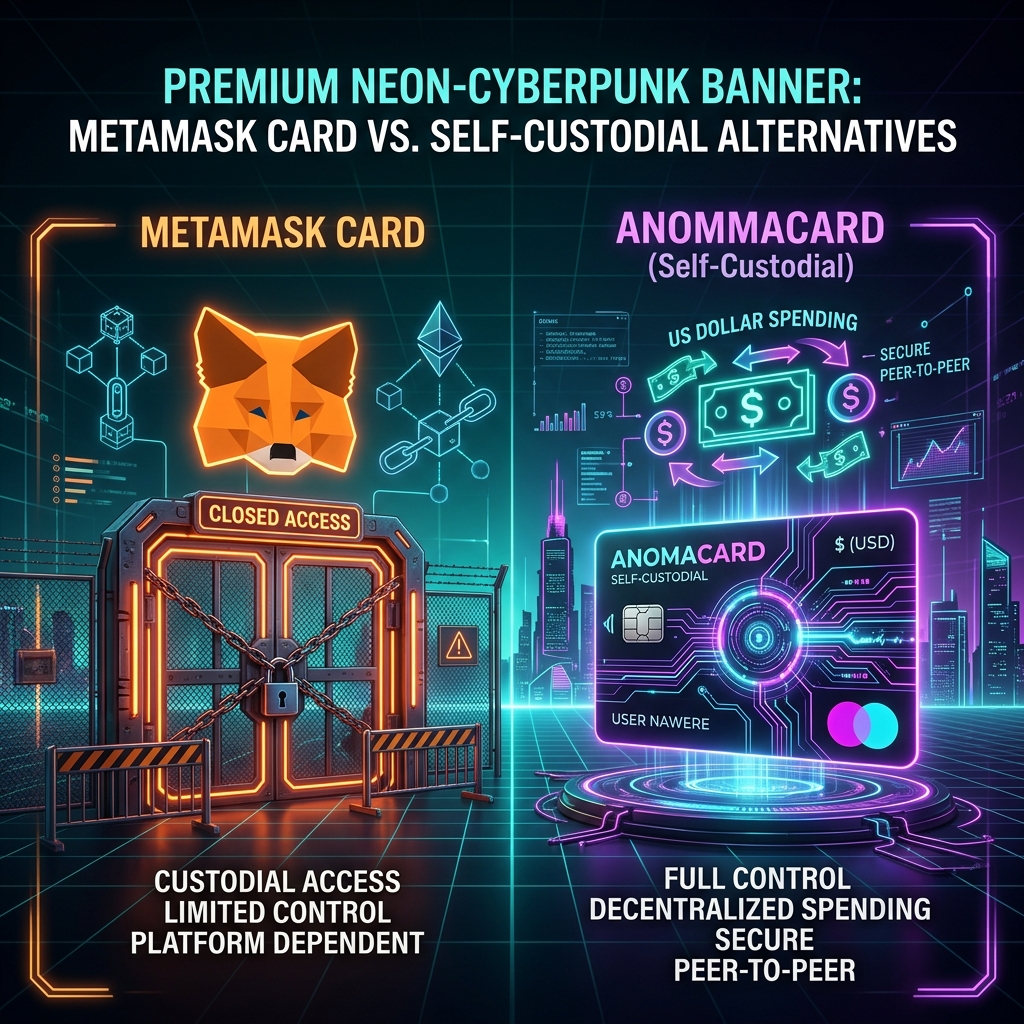
Bleap vs. AnomaCard: Which Self-Custodial Debit Card Actually Protects Your Privacy?
The Promise and Illusion of Self-Custodial Crypto Cards
The cryptocurrency revolution was built upon a foundational principle: individual financial sovereignty. For over a decade, digital asset enthusiasts sought a seamless way to spend their decentralized tokens in the real world without surrendering ownership to centralized intermediaries. Early solutions relied on custodial Web2 crypto debit cards issued by major centralized exchanges. While convenient, these legacy payment products required users to deposit digital assets into custodial wallets, forfeiting private keys and exposing funds to exchange insolvencies, account freezes, and aggressive regulatory oversight.
In response to these systemic vulnerabilities, the Web3 ecosystem witnessed the rise of self-custodial payment infrastructure. Modern crypto debit cards promise to bridge the gap between decentralized finance (DeFi) and global Point-of-Sale (POS) networks without compromising asset ownership. In any comprehensive non-custodial crypto card comparison, two prominent players frequently emerge: Bleap and AnomaCard. While both platforms champion self-custody, they take radically divergent approaches to identity verification, personal data retention, and transaction secrecy. In this detailed Bleap review, we examine whether smart contract wallets can truly deliver financial autonomy when paired with mandatory government identity verification.
Bleap Review: Smart Contract Architecture and Zero FX Fees
To evaluate Bleap fairly, one must recognize its impressive technical achievements in wallet engineering. Bleap utilizes account abstraction (ERC-4337) and smart contract wallet architecture to eliminate traditional seed phrase friction. By leveraging WebAuthn and Passkeys, Bleap allows users to create and manage self-custodial wallets using biometric authentication on their mobile devices or web browsers. This design ensures that users retain exclusive cryptographic ownership of their private keys, preventing unauthorized third-party freezes on the blockchain layer.
Furthermore, Bleap has gained significant traction due to its attractive fee schedule and payment network integrations. The platform offers a crypto card backed by the Mastercard merchant network, enabling global acceptance at millions of online and offline locations. One of Bleap's standout marketing features is its zero foreign exchange fee (0% FX fee) model on international payments. For international travelers and digital nomads spending stablecoins across multiple currencies, zero FX markups represent substantial savings compared to traditional bank card fees. When evaluating Bleap vs MetaMask card and Gnosis Card solutions, Bleap's native smart contract integration and fee efficiency present a compelling case for Web3 usability.
The Bleap Privacy Paradox: Self-Custody with Mandatory KYC
Despite its robust smart contract security, Bleap suffers from a fundamental structural paradox: it couples self-custodial architecture with mandatory Know Your Customer (KYC) identity verification. Before a user can generate a virtual card or request a physical card on Bleap, they must undergo invasive identity checks. This process requires scanning official government documents (such as a passport or driver's license), submitting real-time facial biometric scans, and confirming proof of residential address.
This requirement introduces a severe privacy bottleneck into what claims to be a decentralized product. By forcing identity verification, Bleap creates a permanent, immutable link between a user's legal identity and their self-custodial smart contract wallet address. On-chain chain analytics firms, compliance databases, and third-party card processors can trivially correlate every real-world coffee purchase, hotel booking, or online transaction with the user's entire public blockchain transaction history.
Furthermore, storing biometric data and passport scans in centralized compliance databases exposes users to severe security threats. History has repeatedly demonstrated that centralized KYC databases are prime targets for cyberattacks, data breaches, and identity theft. If a compliance partner suffers a leak, a user's passport scan, home address, and linked wallet balance are exposed to malicious actors. For privacy purists, self-custody without identity secrecy is merely an illusion of freedom.
AnomaCard: The Superior Non-Custodial Bleap Alternative for True Privacy
For individuals who refuse to compromise their personal data, AnomaCard stands as the premier Bleap alternative. Designed from the ground up for absolute financial privacy, AnomaCard delivers genuine non-custodial asset control combined with 100% zero-KYC card issuance. Unlike platforms that demand passport verification, AnomaCard requires no personal identity checks, no selfie scans, no credit history inquiries, and no registration forms.
With AnomaCard, financial sovereignty is fully realized. Users simply connect their preferred self-custodial wallet—such as MetaMask, Rabby, Ledger, Trezor, or Phantom—select their preferred stablecoin (USDT or USDC), and fund their balance across low-cost blockchain networks including Arbitrum, Solana, and Binance Smart Chain (BSC). Within seconds, the platform generates a high-tier virtual Mastercard or Visa card pre-loaded with funds. Because AnomaCard operates entirely without identity tracking, your real-world purchases remain completely disconnected from your personal identity and main crypto wealth.
Head-to-Head Comparison: Bleap vs. AnomaCard
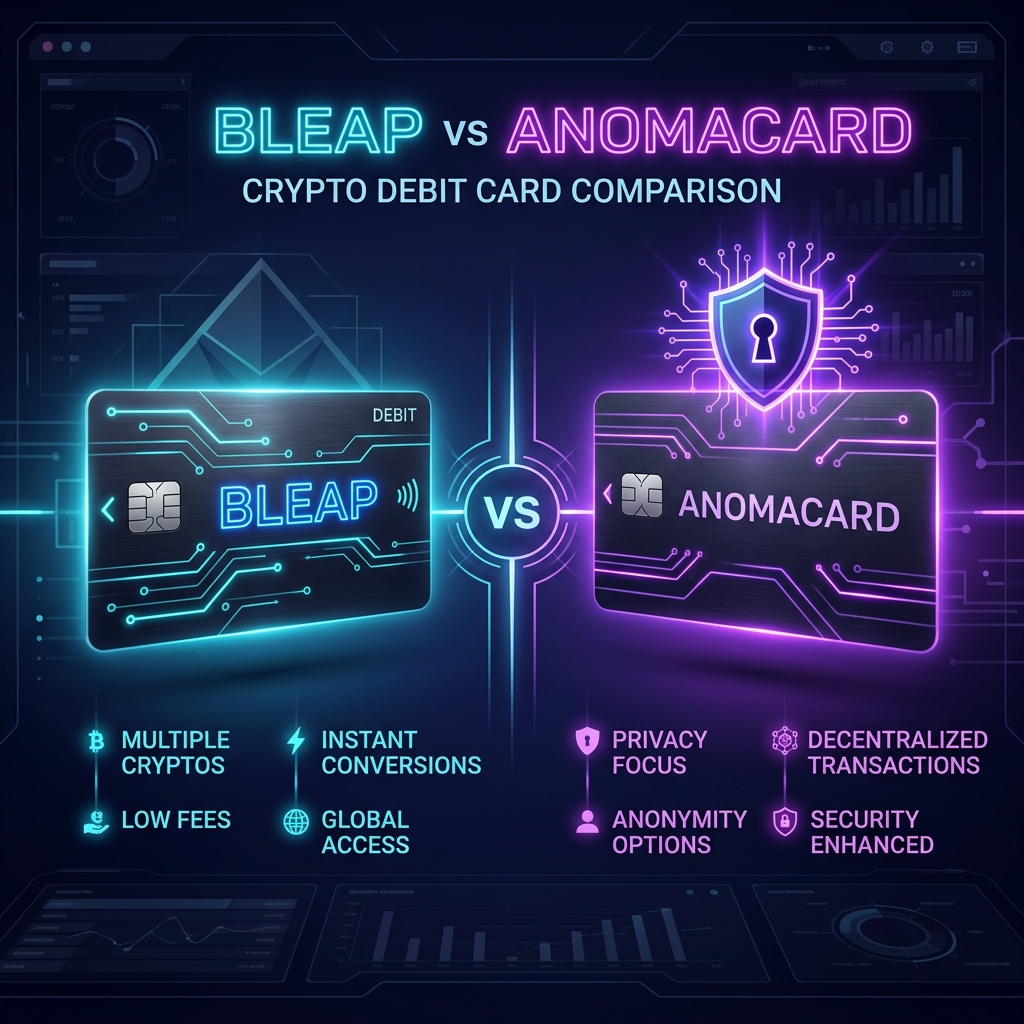
To understand which card best fits your financial lifestyle, consider this direct comparison between Bleap and AnomaCard across key operational criteria:
- Custody Architecture: Bleap uses an ERC-4337 smart contract wallet tied to Passkeys. AnomaCard uses direct self-custody wallet connections for instant stablecoin card funding. Both ensure you maintain non-custodial ownership of your funds prior to spending.
- Identity Verification (KYC): Bleap requires mandatory identity verification, passport scanning, and facial biometrics. AnomaCard requires zero KYC, preserving complete anonymity and zero data collection.
- Onboarding Speed: Bleap's onboarding takes time for document processing and manual identity approval. AnomaCard allows instant card creation in under 60 seconds without awaiting third-party approvals.
- Privacy & Data Security: Bleap links your legal name and passport to your on-chain wallet address, exposing your transaction history to compliance trackers. AnomaCard completely isolates your payment fingerprint, protecting your privacy against chain surveillance.
- Fee Structure: Bleap offers 0% FX fees with smart contract execution fees. AnomaCard features low, transparent top-up rates with a lifetime VIP fee tier dropping to 0.30% for high-volume users.
- Merchant Acceptance: Both platforms provide cards accepted across millions of global merchants on the Mastercard and Visa payment networks.
How to Setup an Anonymous Self-Custodial Card with AnomaCard
Getting started with an anonymous virtual card on AnomaCard takes less than two minutes. Follow these simple steps:
- Connect Your Self-Custody Wallet: Navigate to the official AnomaCard platform. Connect your Web3 wallet without filling out registration forms or providing an email address.
- Select Network and Stablecoin: Choose between USDT or USDC on fast, low-fee networks like Arbitrum, Solana, or BSC to avoid high Ethereum gas fees.
- Generate Your Virtual Card: Enter the amount you wish to load onto your card. Confirm the transaction through your wallet.
- Spend Anywhere Globally: Once confirmed on-chain, your virtual card details (card number, expiration date, CVV) appear instantly. Use the card at any online store, subscription service, or travel merchant worldwide.
Conclusion: Choosing Genuine Financial Sovereignty
While Bleap deserves credit for advancing smart contract wallet technology and zero FX fee payments, its reliance on mandatory passport scanning compromises the foundational principle of crypto privacy. When choosing between non-custodial crypto card solutions, users must ask themselves whether they are willing to surrender their identity data for marginal fee savings. For privacy purists, digital nomads, and security-conscious crypto holders, AnomaCard provides the perfect balance: self-custodial control, instant card creation, and absolute anonymity. Protect your financial footprint and claim true payment freedom with AnomaCard today.
Ready to take control of your financial privacy?
Order Your Anonymous Card NowAnomaCard Protocol
Verified ResearchPublished by the AnomaCard Research Protocol. Focused on decentralized financial privacy, self-custodial architecture, and zero-KYC payment solutions.