Centralized Exchanges vs. Decentralized Spending: Protecting Your Assets

In the world of cryptocurrency, the mantra "Not your keys, not your coins" has never been more relevant. Over the past few years, the collapse of major centralized exchanges (CEXs) has cost investors billions of dollars. Yet, millions of users still leave their digital assets sitting on these platforms, exposing themselves to counterparty risk, hacks, and regulatory overreach.
The transition from relying on centralized exchanges to embracing decentralized spending is not just a matter of ideology; it is a critical step in protecting your wealth. In this comprehensive guide, we will explore the fundamental risks of centralized platforms and explain how decentralized spending solutions, like AnomaCard, offer a secure, private, and frictionless alternative for your daily financial needs.
The Illusion of Security on Centralized Exchanges
When you create an account on a centralized exchange and deposit your cryptocurrency, you are essentially handing over control of your assets to a third party. The exchange holds the private keys to the wallets where your funds are stored. This means you do not technically own the cryptocurrency; you own an IOU from the exchange.
1. Counterparty Risk and Insolvency
Unlike traditional banks, cryptocurrency exchanges are often not backed by government insurance (like the FDIC in the United States). If a centralized exchange mismanages customer funds, engages in risky trading, or faces a sudden liquidity crisis, it can halt withdrawals without warning. The catastrophic failures of major platforms in recent years serve as a grim reminder that even the most seemingly stable exchanges can collapse overnight, leaving users with total losses.
2. Honeypots for Hackers
Centralized exchanges aggregate billions of dollars worth of cryptocurrency in single locations. This makes them massive, irresistible targets for sophisticated hacking groups. While top-tier exchanges invest heavily in security, breaches still occur. If the exchange’s hot wallets are compromised, your funds can vanish instantly.
3. Regulatory Freezes and Account Lockouts
Because CEXs must comply with strict Know Your Customer (KYC) and Anti-Money Laundering (AML) regulations, they have the power to freeze your account at any time. A simple misunderstanding regarding a transaction’s origin can lead to your account being locked for months while you navigate a labyrinth of customer support and provide extensive documentation. Your assets are held hostage.
The Off-Ramp Dilemma
If holding funds on a CEX is dangerous, why do so many people do it? The primary reason is convenience, specifically the ease of "off-ramping"—converting cryptocurrency back into fiat currency to spend in the real world.
Historically, if you wanted to buy a coffee or pay for a flight with your crypto profits, you had to transfer funds from your secure hardware wallet back to a centralized exchange, sell the crypto for EUR or USD, and withdraw the fiat to your traditional bank account. This process not only triggers taxable events and incurs high fees but also forces you back into the centralized financial surveillance system.
Decentralized Spending: The Paradigm Shift
Decentralized spending represents a fundamental shift in how we interact with digital assets. It allows you to maintain full custody of your cryptocurrency in a secure, non-custodial wallet (like MetaMask, Ledger, or Trust Wallet) while still having the ability to spend that value seamlessly in the real world.
By leveraging decentralized protocols and innovative financial bridges, you can bypass the centralized exchange entirely. This eliminates the counterparty risk. Your funds remain entirely under your control until the exact moment you make a purchase.
Enter AnomaCard: The Ultimate Decentralized Spending Solution
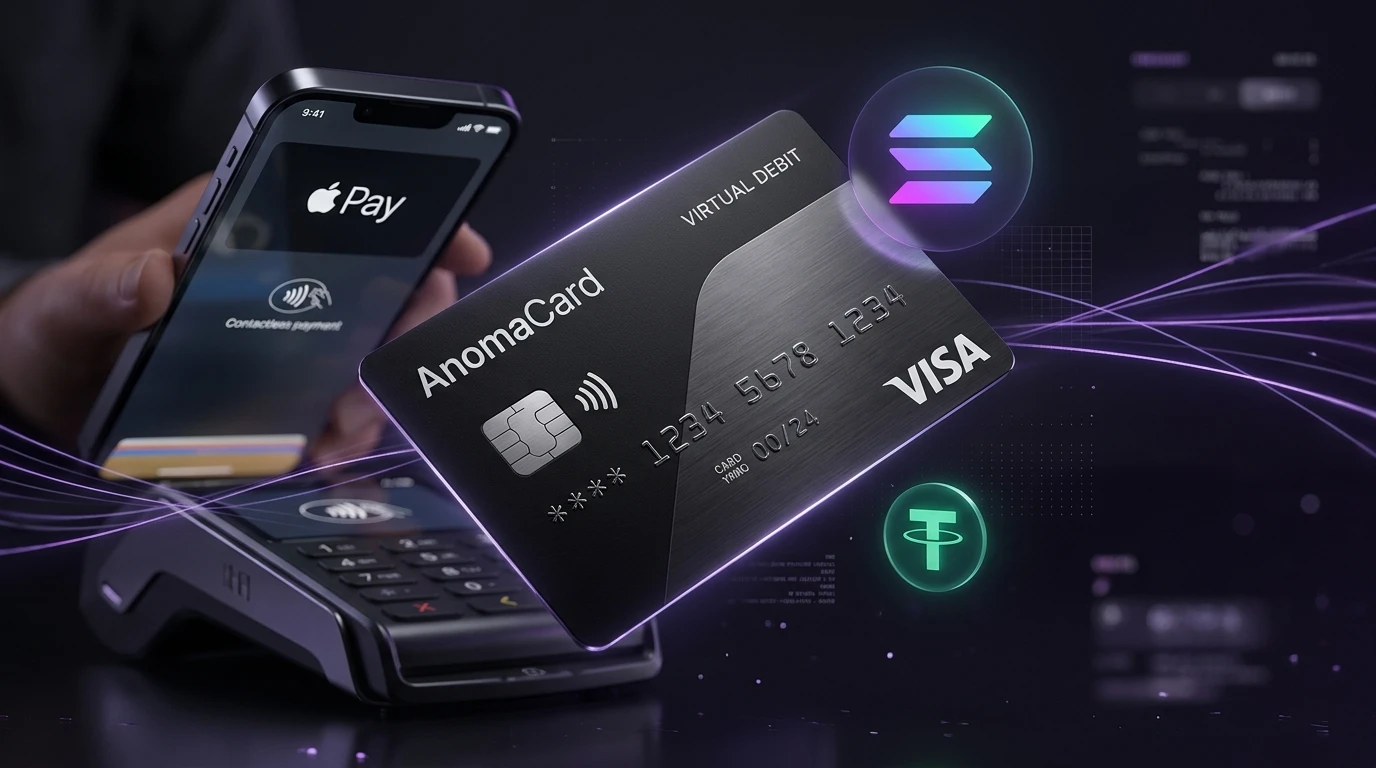
AnomaCard bridges the gap between the secure, private world of Web3 and the traditional financial infrastructure of Visa and Mastercard, without forcing you to compromise on your principles. Here is why AnomaCard is the definitive solution for protecting your assets:
Absolute Custodial Control
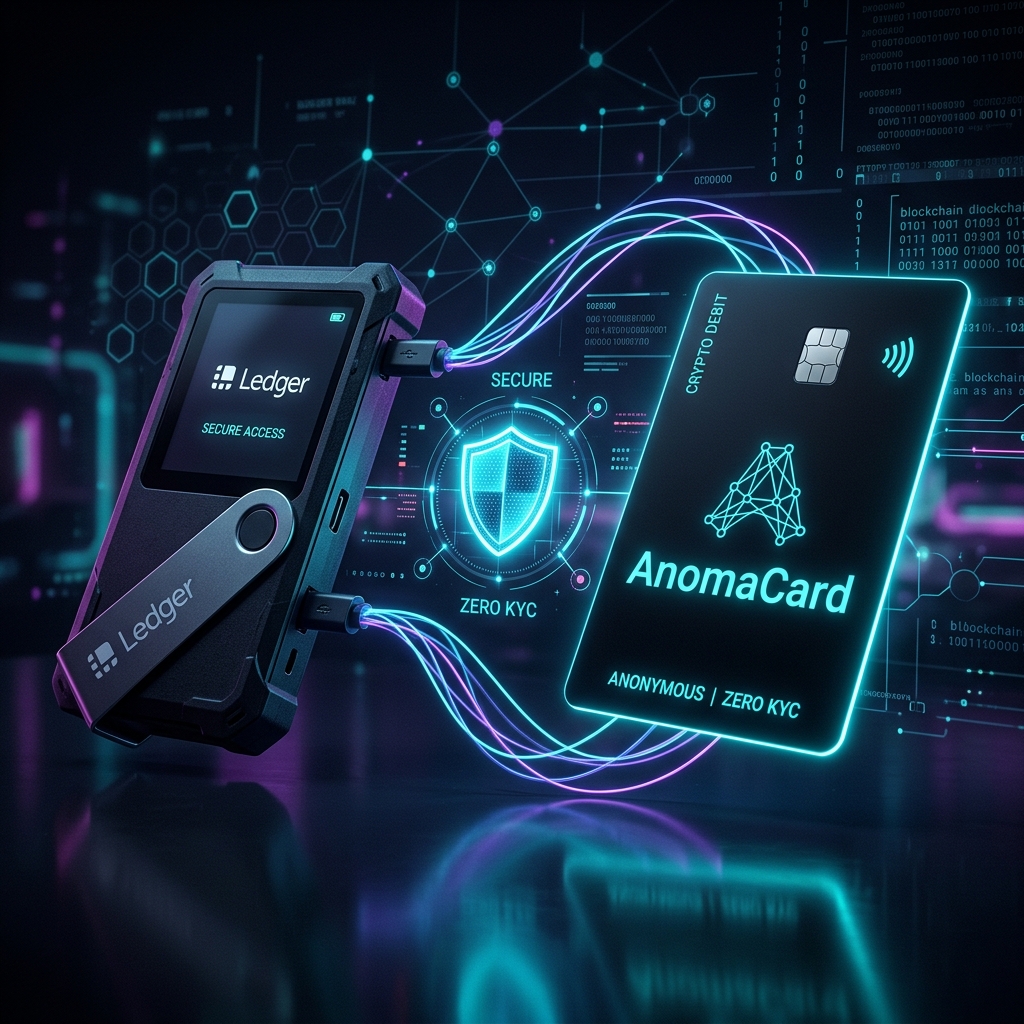
With AnomaCard, you never deposit your entire portfolio into a centralized vault. You simply fund your card directly from your non-custodial wallet (via Web3 connect) exactly when you need to spend. Your main assets remain completely secure in cold storage. If AnomaCard were to disappear tomorrow, your primary wealth would be entirely unaffected.
No KYC, No Surveillance
Traditional crypto debit cards provided by major exchanges require invasive identity verification. You must upload your passport, provide proof of address, and submit to facial recognition scans. AnomaCard respects your privacy. We offer anonymous, KYC-free crypto cards. You can spend your crypto globally without linking every transaction to your real-world identity.
Instant Liquidity Across Blockchains
AnomaCard supports instant funding across multiple networks, including Ethereum, Solana, Binance Smart Chain, and Polygon. You don't need to wait days for a bank wire or pay exorbitant CEX withdrawal fees. You fund your card via a smart contract, and the fiat equivalent is instantly available for spending at millions of merchants worldwide, both online and in-store.
Conclusion: Take Back Your Financial Sovereignty
Leaving your digital assets on a centralized exchange is a gamble with your financial future. The risks of insolvency, hacking, and arbitrary account freezes far outweigh the convenience they offer.
Decentralized spending is not a future concept; it is available right now. By using a secure hardware wallet for storage and AnomaCard for your daily spending, you achieve the perfect balance: absolute security for your savings and frictionless liquidity for your lifestyle. Stop trusting centralized platforms with your money. Reclaim your financial sovereignty today.
Ready to take control of your financial privacy?
Order Your Anonymous Card NowAdmin
Verified ResearchPublished by the AnomaCard Research Protocol. Focused on decentralized financial privacy, self-custodial architecture, and zero-KYC payment solutions.