MoonPay and Ramp Alternatives: How to Use Crypto Without Verification
The End of Financial Privacy on Centralized On-Ramps
For years, crypto enthusiasts have relied on fiat-to-crypto gateways like MoonPay, Ramp, Transak, and Banxa to seamlessly enter the digital asset ecosystem. These platforms provided an essential bridge between traditional finance and Web3, making it incredibly easy to purchase Bitcoin, Ethereum, and stablecoins using a simple credit card or bank transfer.
However, this convenience came at a massive, often overlooked cost: the complete erosion of financial privacy. As regulatory pressures from global entities mounted, these platforms evolved from simple payment processors into strict financial surveillance chokepoints. Today, it is virtually impossible to use MoonPay or Ramp without submitting to aggressive Know Your Customer (KYC) procedures. You are required to scan your government-issued ID, provide a live biometric selfie, disclose your permanent residential address, and sometimes even submit utility bills or source-of-wealth declarations just to make a basic crypto transaction.
Once you hand over this deeply personal data, your entire on-chain history is permanently tethered to your real-world identity. Every wallet you interact with, every decentralized application (dApp) you use, and every transaction you make can be traced back to you by blockchain analytics firms, tax authorities, and marketing agencies. For a technology that was fundamentally built on the principles of anonymity, pseudonymity, and financial sovereignty, this is a glaring contradiction. The market is desperately seeking viable MoonPay and Ramp alternatives that respect user privacy.
Why Users Are Seeking Alternatives to MoonPay and Ramp
The shift away from mainstream on-ramps is not just about avoiding paperwork; it’s about reclaiming fundamental rights to financial autonomy. Here are the primary reasons why the crypto community is aggressively searching for no-KYC alternatives:
1. Extreme Data Vulnerability
When you submit your passport and facial biometrics to a centralized gateway, you are trusting them with the most sensitive data imaginable. Unfortunately, centralized databases are prime targets for hackers. In the past, massive data breaches at prominent crypto exchanges and service providers have led to millions of user identities being sold on the dark web. If a platform like MoonPay or Ramp gets compromised, your identity could be stolen and used for malicious purposes indefinitely.
2. Creeping Financial Censorship
Centralized gateways operate at the whim of traditional banking partners and local governments. This means they can, and often do, arbitrarily freeze accounts, block transactions to specific decentralized finance (DeFi) protocols, or ban users from certain jurisdictions. If your transaction is flagged by an opaque algorithmic risk engine, your funds can be locked up for weeks while you beg customer support for access. True crypto was meant to be permissionless, not subject to the approval of a corporate compliance officer.
3. Exorbitant Hidden Fees
Beyond the privacy concerns, the fee structure of mainstream on-ramps is notoriously predatory. While they advertise "low fees," the reality often involves a complex web of network fees, processing fees, and significantly inflated asset spreads. By the time the crypto actually lands in your non-custodial wallet, you may have lost anywhere from 4% to 10% of your purchasing power. Users are realizing that paying a massive premium for the "privilege" of giving away their data makes no logical sense.
The AnomaCard Solution: The Ultimate Privacy Gateway
If you want to completely bypass the invasive surveillance of traditional gateways, the solution isn't to look for a slightly less strict exchange; the solution is to change the medium of exchange entirely. This is where AnomaCard emerges as the premier alternative to MoonPay and Ramp.
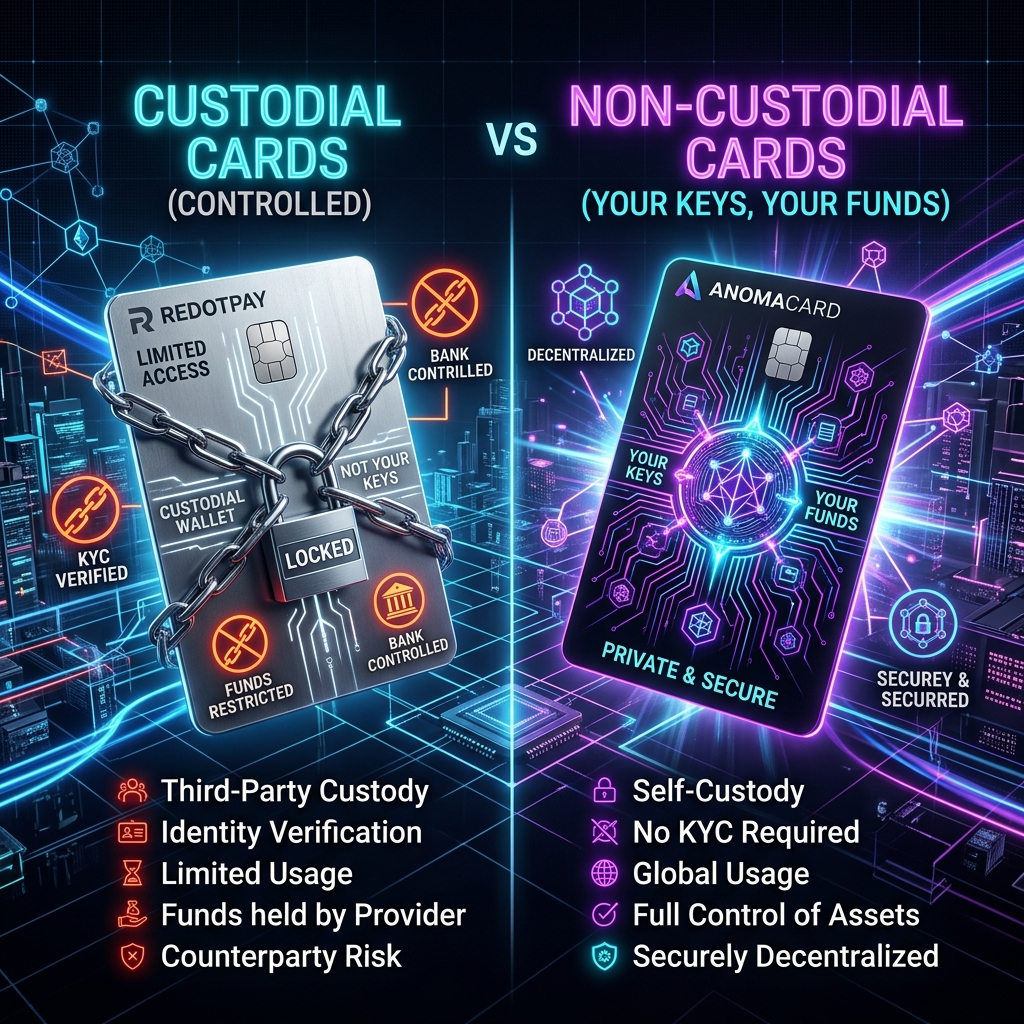
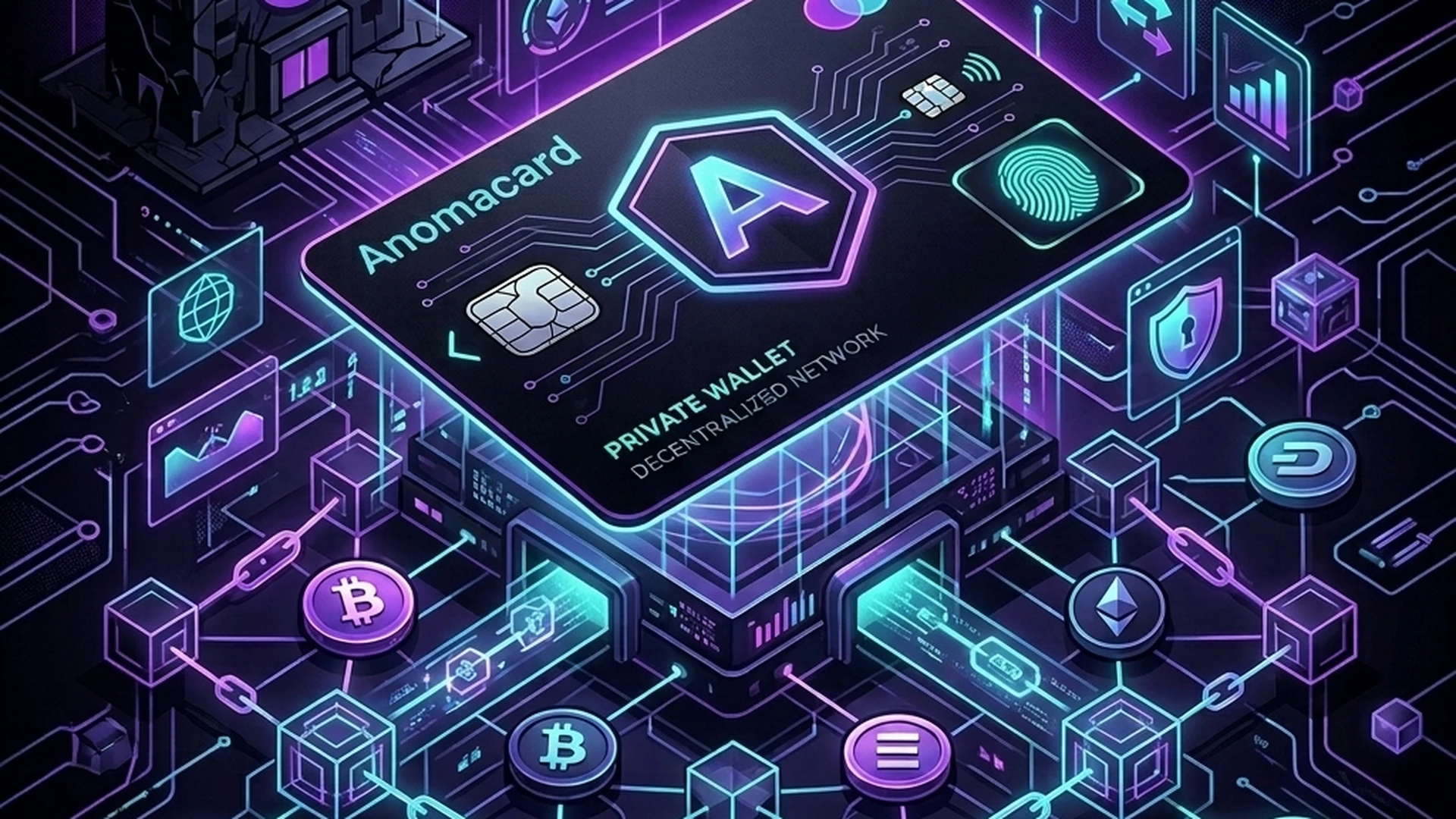
AnomaCard offers a revolutionary product: fully anonymous, pre-funded virtual and physical crypto debit cards. Instead of linking your bank account to an exchange and leaving a permanent paper trail, you can simply load an AnomaCard using your existing cryptocurrency and spend it anywhere in the world, just like a regular Visa or Mastercard, without ever undergoing a KYC check.
How AnomaCard Restores Your Privacy
AnomaCard operates on a fundamentally different philosophy than traditional fiat-to-crypto gateways. Here is how it functions as the perfect alternative:
- Zero ID Verification: When you register for AnomaCard, you are never asked for a passport, a driver's license, or a biometric selfie. Your identity remains 100% yours. You can operate under a pseudonym, protecting your physical safety and financial history.
- No Bank Account Linkage: Traditional off-ramps require you to withdraw your crypto to a personal bank account, instantly alerting traditional financial institutions to your crypto activities. With AnomaCard, your crypto is converted into spendable fiat on the card itself. You sever the link between your crypto wallet and your traditional bank entirely.
- Global Acceptance: Whether you choose the virtual card for online shopping and subscription services or the physical card for in-store purchases and ATM withdrawals, AnomaCard works seamlessly worldwide via the Visa and Mastercard networks.
- Decentralized Loading: You can load your AnomaCard directly from your non-custodial wallet (like MetaMask, Trust Wallet, or a Ledger hardware wallet) using a variety of cryptocurrencies including Bitcoin, Ethereum, USDT, and USDC. The transaction is verified on-chain, and your card is instantly funded.
Step-by-Step: Transitioning Away from Centralized Gateways
Moving away from surveillance-heavy platforms like MoonPay and Ramp is easier than you might think. Here is a practical blueprint for achieving total financial privacy using AnomaCard:
Step 1: Secure Your Base Crypto
If you don't already have crypto, you can use peer-to-peer (P2P) marketplaces like Bisq, RoboSats, or decentralized exchanges to acquire your initial assets without KYC. Alternatively, you can use cash-to-crypto ATMs in your local area. Keep these assets in a secure, non-custodial wallet where only you hold the private keys.
Step 2: Obtain Your AnomaCard
Navigate to the AnomaCard platform and select the card tier that best suits your lifestyle. The process is incredibly straightforward and respects your time. You only need to provide an email address (which can be an anonymous ProtonMail account) to receive your virtual card details. There are no pending KYC approvals to wait for; your card is issued almost instantly upon payment.
Step 3: Load and Spend Freely
Whenever you need to spend fiat currency, simply transfer the required amount of crypto from your private wallet to your AnomaCard top-up address. The conversion is handled seamlessly, and your card is immediately ready for use. You can now pay for flights, book hotels, buy electronics, or pay for web hosting without leaving a digital footprint that connects back to your crypto holdings.
Conclusion: The Future of Crypto is Private
The original vision of cryptocurrency was to create an un-censorable, peer-to-peer electronic cash system. Platforms like MoonPay and Ramp, while instrumental in driving early adoption, have ultimately betrayed that vision by integrating deeply with the traditional banking surveillance apparatus. Every time you use them, you are compromising your privacy and putting your data at risk.
You don't have to accept this compromise. As the ultimate MoonPay alternative, AnomaCard provides the perfect bridge between the decentralized Web3 world and the traditional fiat economy. It empowers you to utilize your crypto wealth in the real world while maintaining the absolute anonymity that blockchain technology was designed to protect. Stop giving away your data for convenience. Reclaim your financial sovereignty today.
Ready to take control of your financial privacy?
Order Your Anonymous Card NowAnomaCard Team
Verified ResearchPublished by the AnomaCard Research Protocol. Focused on decentralized financial privacy, self-custodial architecture, and zero-KYC payment solutions.