Why Privacy Matters: Traditional Banks vs. Web3 Cards

In an increasingly digital world, the concept of financial privacy is rapidly eroding. Every time you swipe a traditional bank card, pay for a subscription, or transfer money to a friend, a vast network of financial institutions, data brokers, and government agencies logs your transaction. But why does privacy matter so much, and how are non-custodial Web3 cards like AnomaCard revolutionizing the way we protect our financial autonomy? In this comprehensive guide, we delve into the stark contrast between traditional banking surveillance and the liberating anonymity of Web3.
The Illusion of Privacy in Traditional Banking
When you open a traditional bank account, you enter into an agreement that strips away your financial anonymity. Under the guise of security and regulatory compliance—such as Know Your Customer (KYC) and Anti-Money Laundering (AML) laws—banks collect an unprecedented amount of personal data. This includes your full name, physical address, social security number, employment details, and a real-time ledger of your spending habits.
Data Harvesting and Third-Party Sharing
Traditional banks are not just financial custodians; they are massive data repositories. Your spending patterns provide a highly detailed psychological and demographic profile. Are you buying baby clothes? Paying for medical treatments? Donating to specific political causes? Banks track these data points. Worse, this information is frequently shared with third-party marketers, credit scoring agencies, and sometimes even suffers from catastrophic data breaches. Your financial privacy is treated as a commodity, bought and sold in the data economy.
Censorship and Financial Exclusion
Beyond data privacy, traditional banking systems wield the power of financial censorship. Because they hold custody of your funds, they can freeze your accounts, block specific transactions, or entirely debank you without due process. Whether it is a misunderstood international transfer, a donation to a controversial but legal charity, or simply a bureaucratic error, centralized banks have the absolute authority to lock you out of your own wealth.
Enter Web3: The Paradigm Shift to Non-Custodial Finance
Web3 and decentralized finance (DeFi) were born out of a desire to return financial control to the individual. At the core of this movement is the principle of non-custodial asset management. But what does "non-custodial" actually mean?
In a non-custodial setup, you hold the private keys to your wealth. There is no central bank, no corporate entity, and no middleman who can access, freeze, or confiscate your funds. You interact directly with smart contracts on the blockchain. This eliminates the need for permission and drastically reduces the risk of institutional censorship.
The Evolution of Crypto Cards
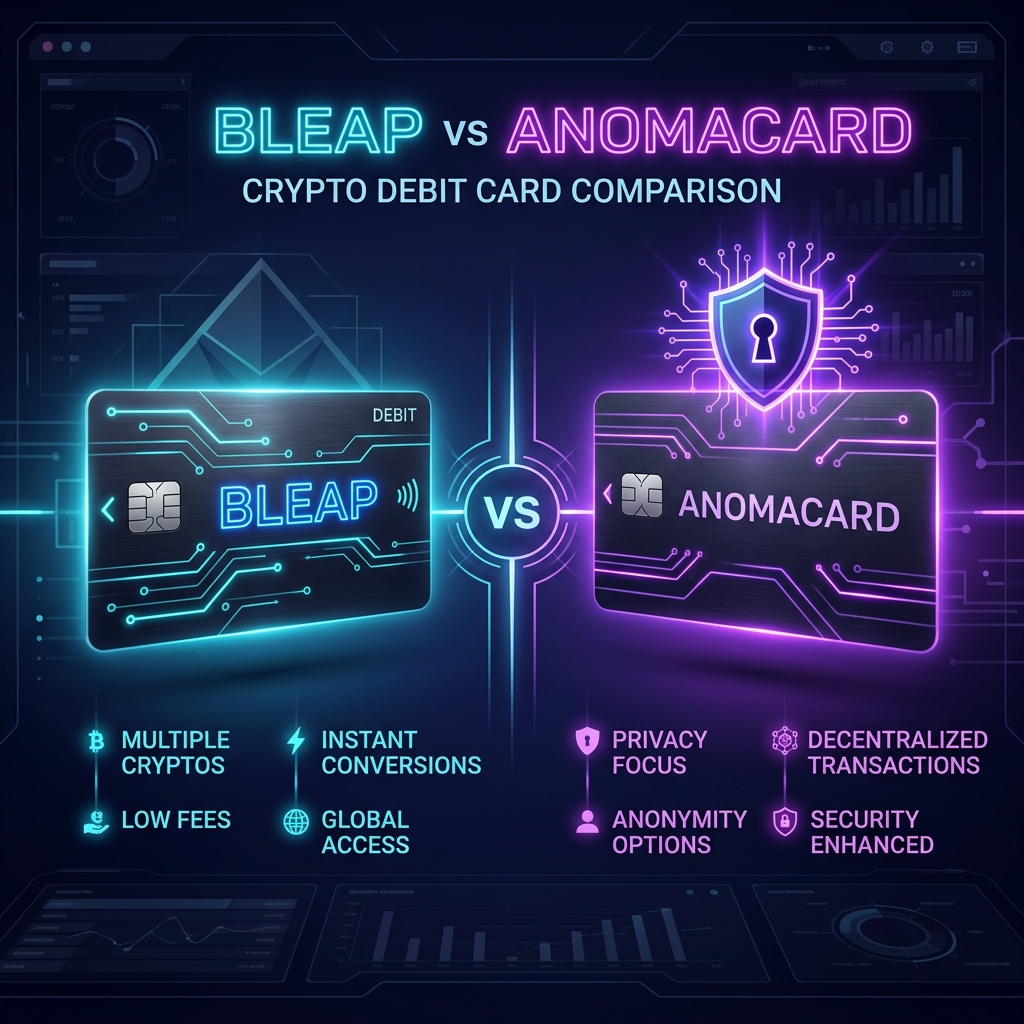
While holding crypto in a non-custodial wallet is fantastic for wealth preservation, spending it in the real world has historically been a challenge. Early crypto debit cards emerged to bridge this gap, but they came with a fatal flaw: they required you to surrender your privacy. To get a standard crypto card from major centralized exchanges, you must undergo invasive KYC procedures, linking your crypto wallet directly to your government identity. This defeats the entire purpose of cryptocurrency.
This is exactly where AnomaCard changes the game.
Why AnomaCard is the Ultimate Web3 Privacy Solution
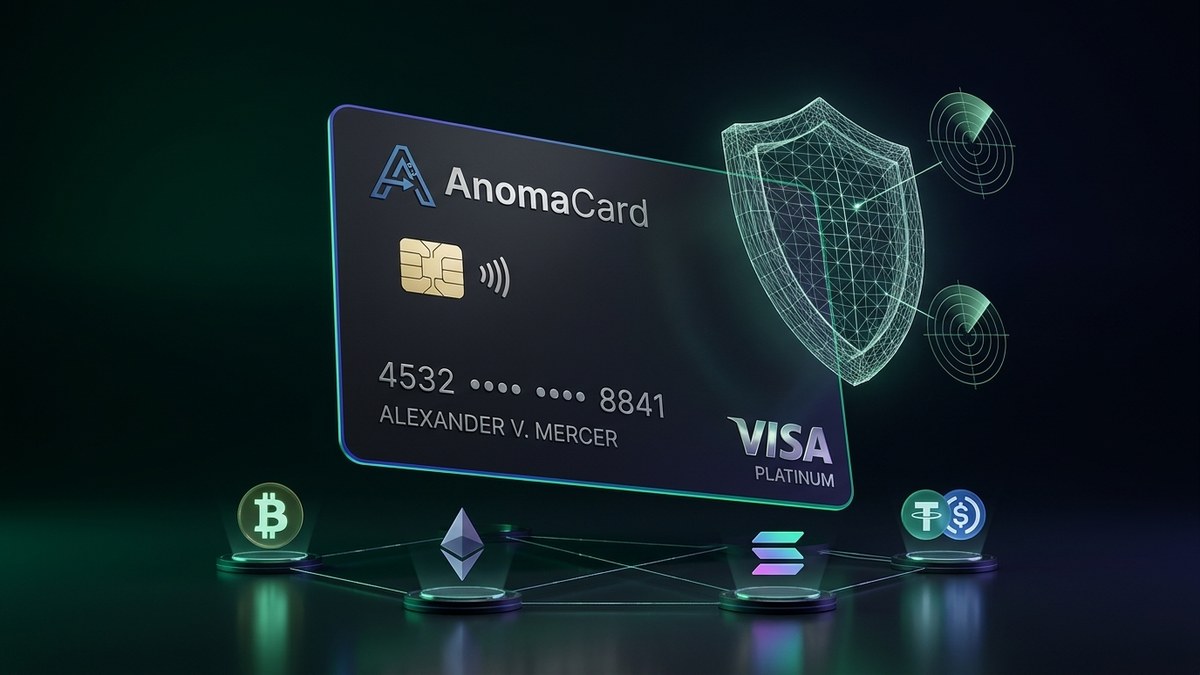
AnomaCard was built from the ground up to solve the privacy paradox of crypto spending. It is the bridge between the permissionless world of Web3 and the traditional fiat economy, without compromising your anonymity.
1. 100% No-KYC Policy
The most significant advantage of AnomaCard is its absolute commitment to privacy. You do not need to provide an ID, a passport, or a utility bill to use the service. AnomaCard respects your right to financial privacy, ensuring that your real-world identity is never tethered to your crypto assets.
2. Truly Non-Custodial Integration
Unlike centralized exchange cards that require you to deposit your crypto into their corporate wallets, AnomaCard operates entirely on Web3 principles. You connect your own non-custodial wallet (like MetaMask, TrustWallet, or Ledger) via secure Web3 protocols. You only authorize the exact amount you wish to load onto your card via a smart contract transaction. AnomaCard never has access to your master wallet or private keys.
3. Seamless Global Spending
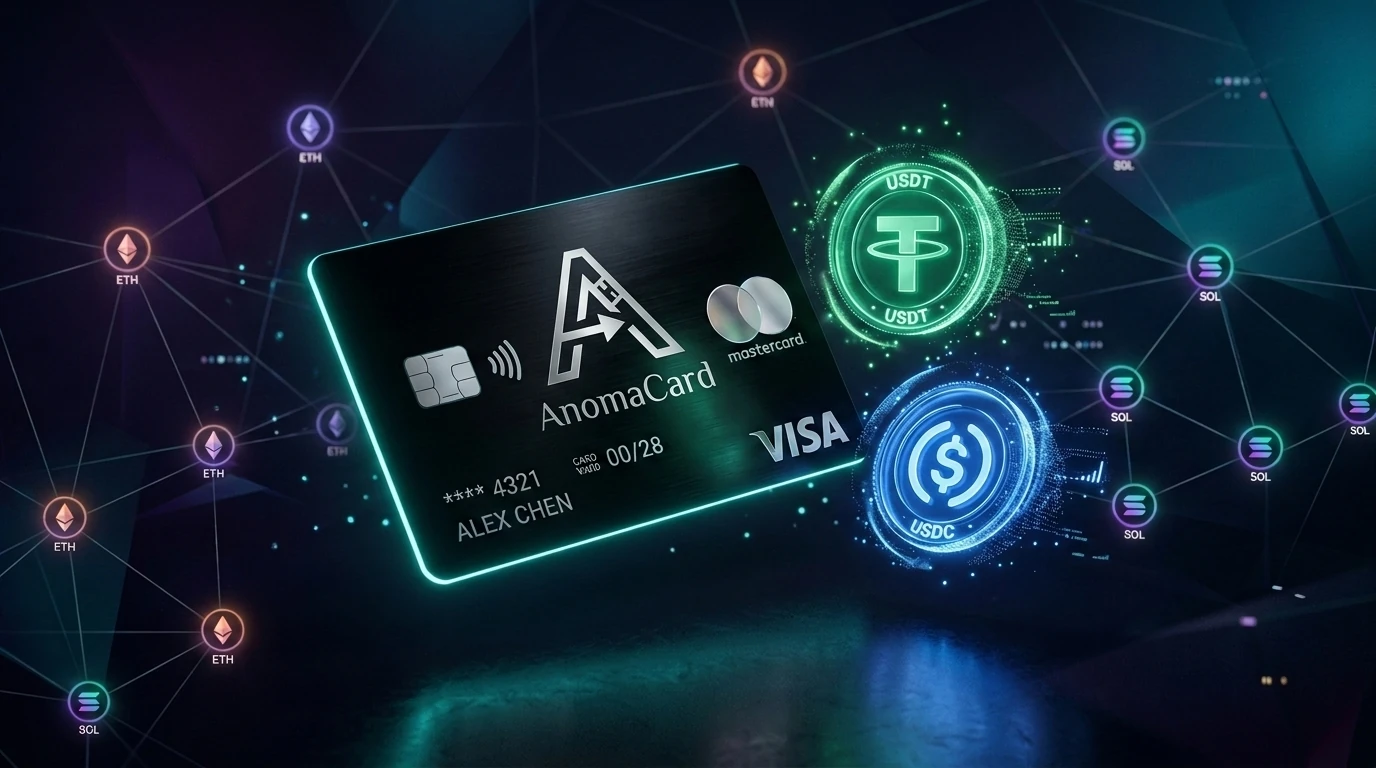
Once loaded, the AnomaCard functions exactly like a premium Visa or Mastercard. You can link it to Apple Pay or Google Pay for seamless tap-and-go payments at millions of merchants worldwide. Whether you are buying a coffee in Paris, booking a flight online, or paying for software subscriptions, the merchant receives fiat currency, while your crypto remains entirely off the grid until the moment of the top-up.
How to Use AnomaCard in 3 Simple Steps
Using AnomaCard is designed to be frictionless and intuitive, even if you are relatively new to DeFi.
- Connect Your Wallet: Navigate to the AnomaCard dApp and connect your preferred Web3 wallet. Supported networks typically include Ethereum, Binance Smart Chain, Polygon, and Solana to ensure low transaction fees.
- Load Your Card: Select the amount of crypto (e.g., USDT, USDC, ETH) you want to convert to fiat spending power. The smart contract instantly processes the transaction, executing the swap at real-time market rates without hidden custodial fees.
- Spend Globally: Your virtual AnomaCard is instantly generated. You can view the card details (Number, Expiry, CVV) via secure cryptographic signatures directly in your browser. Add it to your mobile wallet (Apple Pay/Google Pay) and start spending anonymously immediately.
The Broader Impact of Financial Privacy
Choosing a non-custodial, no-KYC solution like AnomaCard is not about hiding illicit activities; it is about reclaiming a fundamental human right. Financial privacy protects you from predatory marketing, identity theft, and corporate overreach. It ensures that your wealth remains yours, shielded from the arbitrary decisions of centralized authorities.
In a future where Central Bank Digital Currencies (CBDCs) threaten to track every micro-transaction with programmable restrictions, solutions like AnomaCard represent the ultimate firewall for your personal freedom.
Conclusion
The battle between traditional banking and Web3 is ultimately a battle for control. Traditional banks demand your data and dictate how you can spend your money. Non-custodial Web3 cards like AnomaCard empower you to spend your digital wealth seamlessly in the physical world while maintaining absolute, uncompromising privacy.
Stop trading your personal data for the convenience of spending. Embrace the true ethos of cryptocurrency and take back control of your financial footprint today.
Ready to take control of your financial privacy?
Order Your Anonymous Card NowAnomaCard Privacy Team
Verified ResearchPublished by the AnomaCard Research Protocol. Focused on decentralized financial privacy, self-custodial architecture, and zero-KYC payment solutions.