RedotPay Alternatives: The Best Privacy-First Virtual Crypto Cards in 2026
The Rise of RedotPay and the Custodial Conundrum
In the rapidly evolving world of Web3 payments, crypto debit cards have transitioned from a niche luxury to a daily necessity. Among the options that have captured mainstream attention, RedotPay has emerged as a major player. Backed by a sleek mobile app, fast virtual card issuance, and acceptance across 130+ countries on the Visa network, it has become a go-to choice for users wishing to spend their digital assets. A typical RedotPay review praises its low barrier to entry and instant usability.
However, as the platform has grown, so has the scrutiny from security-minded users. Beneath the slick interface lies a fundamental architectural reality: RedotPay is a custodial card. When you deposit stablecoins or major cryptocurrencies into your RedotPay wallet, you are handing over custody of your private keys to a centralized corporation. Your funds are held in their wallets, which means they hold the ultimate authority over your digital assets.
For individuals who entered the cryptocurrency space to escape centralized financial gatekeepers, this custodial model presents a significant risk. If you are looking for a RedotPay alternative that prioritizes your privacy, security, and true asset ownership, it is time to understand the differences between custodial and non-custodial crypto cards and discover the best alternatives available in 2026.
Custodial vs. Non-Custodial Crypto Cards: Why Self-Custody Matters
To understand why users are searching for alternatives, we must look at the technical architecture of Web3 cards. The crypto card market is divided into two models: custodial and non-custodial (self-custodial).
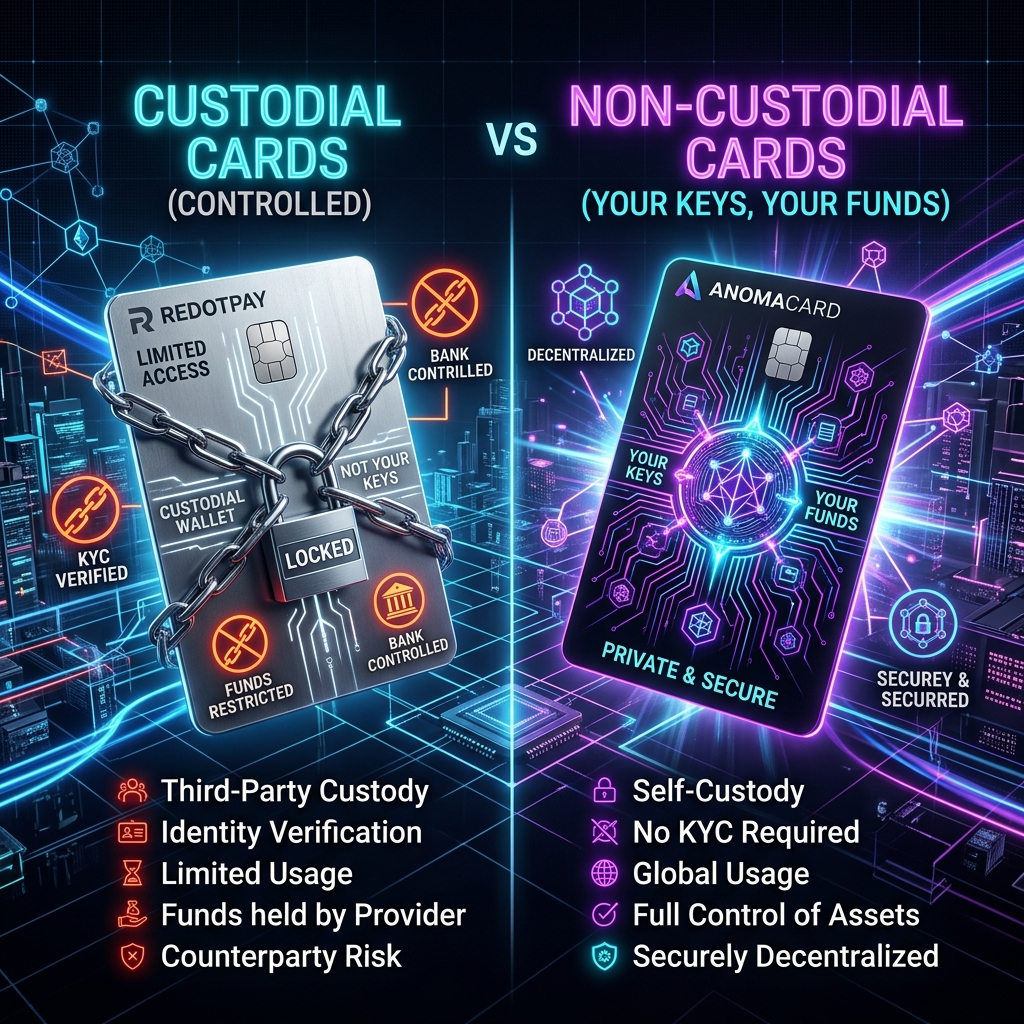
In a custodial model, like RedotPay, the provider acts as a bank. They hold your deposit, control the private keys, and manage the balance. This setup creates several immediate vulnerabilities:
- Counterparty Risk: If the provider faces regulatory issues, insolvency, or technical hacks, your funds can be frozen or lost instantly. You do not have on-chain access to your money.
- Compliance and Account Freezes: Centralized compliance algorithms are notoriously sensitive. If your deposit originates from a smart contract or a decentralized exchange, it can trigger an automated alert. Your account is frozen, and you must submit invasive proof-of-funds documents to regain access.
- Invasive KYC Demands: Custodial cards are heavily integrated with traditional banking partners. To lift spending restrictions and use the card freely, you must submit passport scans, live biometric selfies, and address verifications. This creates a permanent digital identity trail linked to your crypto transactions.
In contrast, a non-custodial crypto card allows you to connect your self-custody wallet (such as Ledger, Trezor, MetaMask, or Rabby) directly to the card contract. Your funds remain in your personal wallet and are only swapped and liquidated at the exact millisecond of a transaction. You retain 100% ownership of your keys and assets right up until the moment of purchase.
AnomaCard: The Ultimate Privacy-First RedotPay Alternative
If you love the convenience of a virtual debit card but refuse to compromise on custody and privacy, AnomaCard is the premier alternative in 2026. Built specifically for Web3 natives, AnomaCard delivers the speed and global reach of RedotPay while operating on a non-custodial, privacy-first model.
AnomaCard does not require you to hand over your personal identity. There are no invasive KYC checks, passport uploads, or selfie verifications. You maintain complete ownership of your funds, loading your virtual card dynamically using stablecoins directly from your self-custody wallet. It provides a secure bridge to the global payment network without the centralized vulnerabilities of custodial providers.
Step-by-Step Guide: How to Set Up and Use AnomaCard
Setting up your AnomaCard is designed to be as fast as custodial cards but without the compliance friction. Here is how you can get started in under two minutes:
- Connect Your Web3 Wallet: Navigate to the AnomaCard platform. You do not need to register with a real name or email. Connect your preferred self-custodial wallet (MetaMask, Rabby, or via WalletConnect) to establish a secure, private session.
- Fund Your Account: Choose your preferred stablecoin (USDT or USDC) and select your network. AnomaCard supports low-fee Layer-2 networks like Arbitrum and Optimism, as well as fast chains like Solana and BSC. Send the deposit directly from your wallet.
- Instantiate Your Virtual Card: As soon as the transaction is confirmed on the blockchain, your virtual card is generated instantly. You will receive a unique card number, expiry date, and CVV.
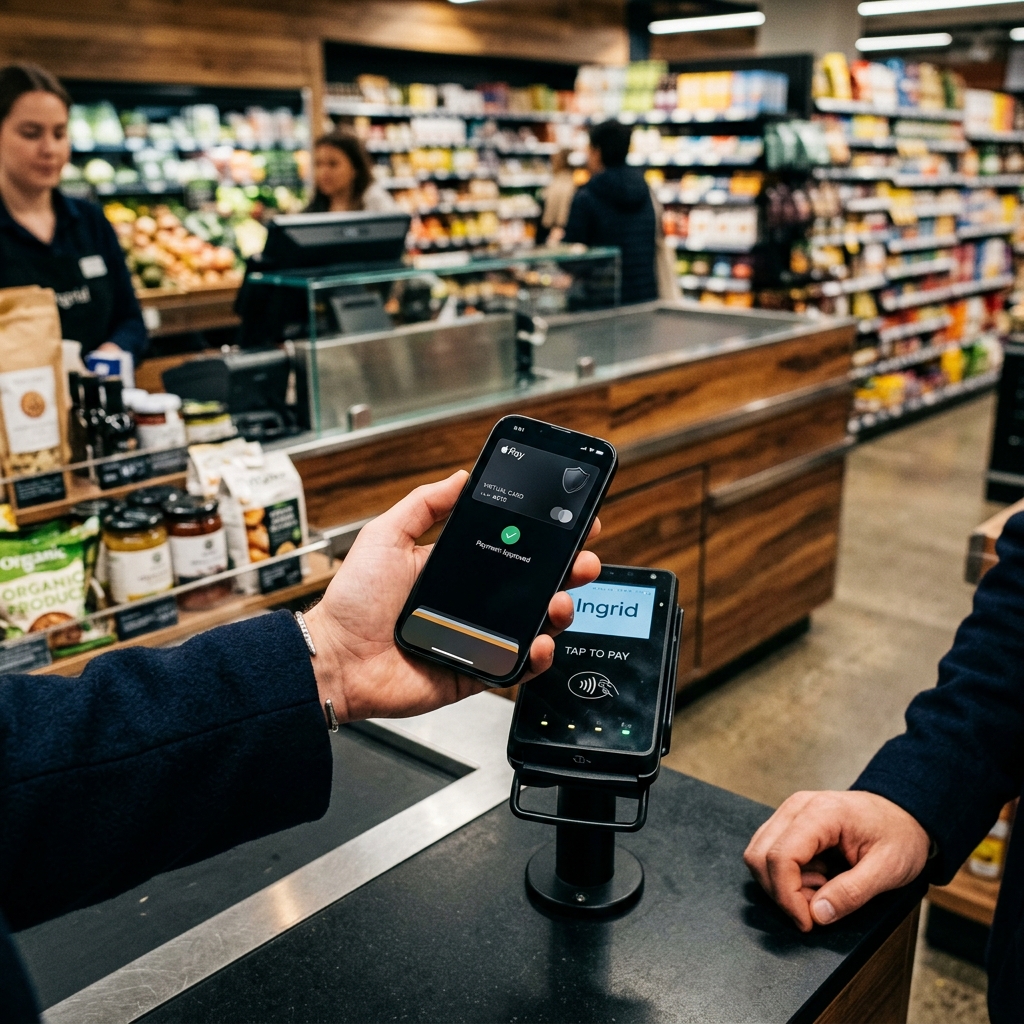
- Add to Apple Pay or Google Pay: Link your new card to your mobile wallet. You are now ready to make contactless payments at physical terminals or shop online. Your crypto balance is converted to fiat in real-time only when a purchase is authorized.
Why AnomaCard Beats RedotPay in 2026
When comparing RedotPay and AnomaCard head-to-head, several factors make AnomaCard the superior choice for security-minded users:
1. True Non-Custodial Architecture
With RedotPay, you must trust a centralized entity to secure your funds. With AnomaCard, you remain in control of your digital wealth. Your assets stay in your decentralized infrastructure until the transaction is executed, eliminating counterparty risk and protecting you from exchange insolvencies.
2. Zero KYC and Absolute Privacy
RedotPay requires verification to unlock the card's full potential, creating a link between your real-world identity and your on-chain assets. AnomaCard operates under a zero-KYC framework. No personal documents are stored on centralized databases, keeping your financial life private and secure.
3. Protection from Arbitrary Blockings
Because AnomaCard does not hold custody of your funds or monitor your wallet history with banking compliance algorithms, you run zero risk of sudden account closures. You spend your crypto assets on your own terms without asking a corporate compliance department for permission.
4. Low-Fee Multi-Chain Support
Funding a custodial wallet can be expensive due to gas fees and internal deposit charges. AnomaCard supports multiple low-cost blockchains, allowing you to load your card with near-zero network fees, saving you money on every deposit.
5. Seamless Mobile Payment Integration
AnomaCard matches RedotPay's convenience by offering full support for Apple Pay and Google Pay. You get a modern, digital-first spending experience that works at millions of merchants worldwide, both online and in-store.
Conclusion: Choose Freedom Over Custody
RedotPay proved that spending crypto in the real world can be simple, but it did so by sacrificing the core principles of Web3: privacy, decentralization, and self-custody. Relying on a custodial provider means trusting a centralized middleman with your financial security.
In 2026, you no longer have to make that trade-off. AnomaCard offers the same global usability, instant virtual card setup, and mobile wallet integration as RedotPay, but with a non-custodial structure that keeps you in control. Take back your financial privacy and upgrade to AnomaCard today.
Ready to take control of your financial privacy?
Order Your Anonymous Card NowAnomaCard Protocol
Verified ResearchPublished by the AnomaCard Research Protocol. Focused on decentralized financial privacy, self-custodial architecture, and zero-KYC payment solutions.