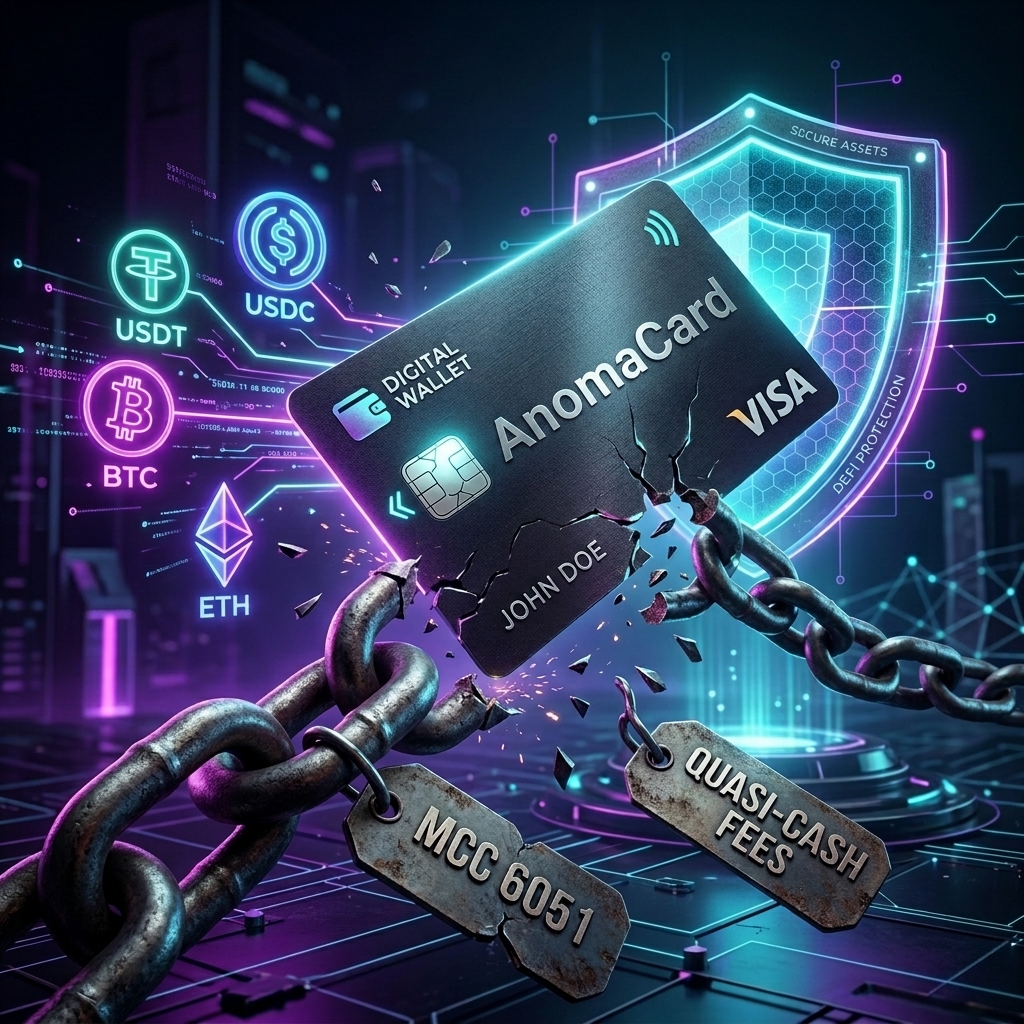
Spend Crypto with Near-Zero Gas: How to Fund Virtual Cards on Arbitrum & Solana
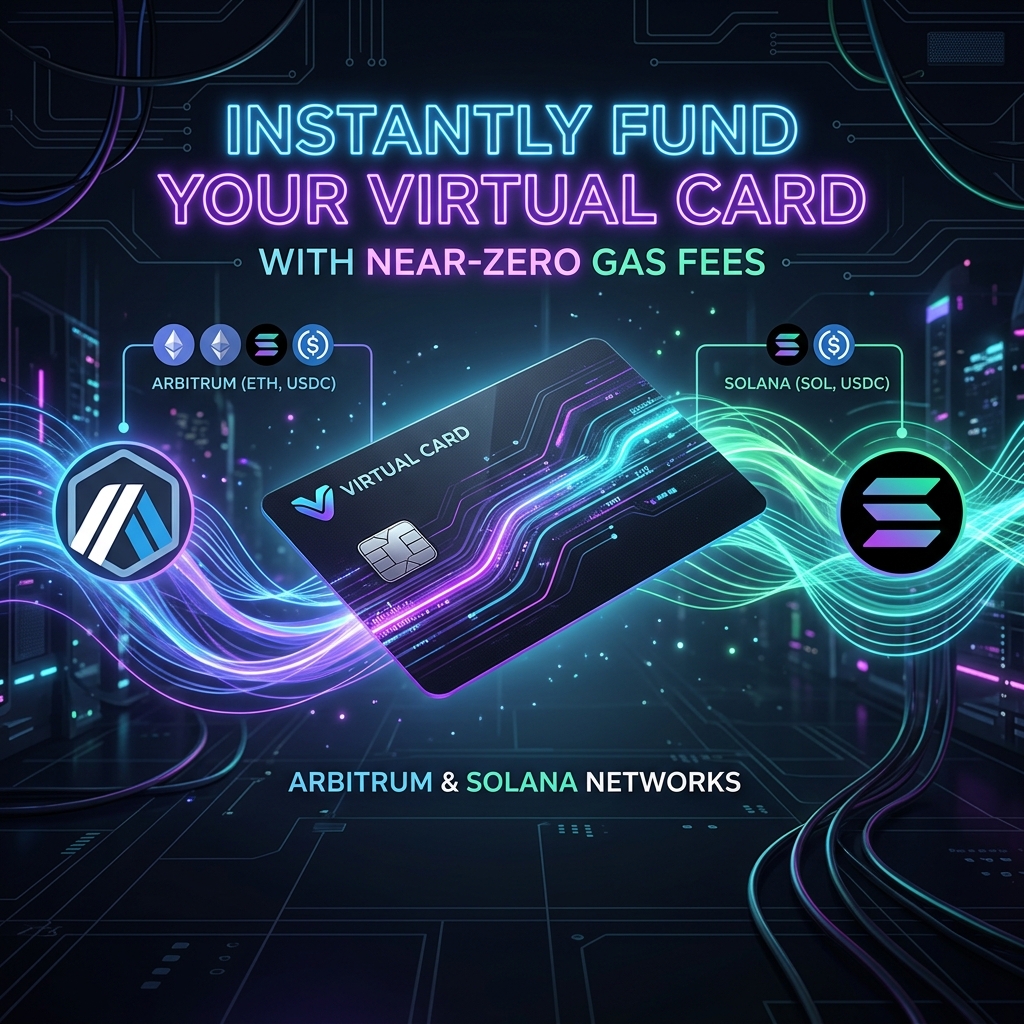
The High Price of Decentralized Spending
For years, cryptocurrency enthusiasts have faced a frustrating paradox. The promise of decentralized finance (DeFi) is to give individuals complete control over their money, bypassing traditional intermediaries. Yet, spending digital assets in the real world has long meant facing a double penalty: the custodial risk of centralized card issuers and the exorbitant gas fees of the Ethereum mainnet. If loading a virtual card with $50 worth of stablecoins requires paying $15 in network transaction fees, the transaction becomes entirely impractical. High gas fees and slow confirmation times on Layer-1 (L1) blockchains have acted as a barrier to using cryptocurrency for daily purchases.
Fortunately, the blockchain landscape has evolved. The emergence of high-performance Layer-1 networks like Solana and Layer-2 (L2) scaling solutions like Arbitrum has transformed how we interact with digital assets. By leveraging these networks, users can fund their cards almost lease-free and instantaneously. In this guide, we will explore the technical and financial differences between funding crypto cards on Layer-1 versus Layer-2 or alternative L1 networks. We will also examine why a non-custodial crypto card like AnomaCard is the ultimate solution for maintaining privacy and control over your wealth without paying a heavy gas tax.
Understanding the Gas Tax: Layer-1 vs. Layer-2 and Solana
To understand why funding virtual cards on Arbitrum and Solana is a game-changer, we must look at the underlying mechanics of blockchain transactions. When you interact with the Ethereum mainnet (Layer-1), you compete with thousands of users for limited block space. Because Ethereum prioritizes security and decentralization over speed, transaction throughput is capped. During peak activity, gas fees skyrocket, turning simple token transfers into expensive endeavors. This is the L1 gas tax, making micro-transactions or regular, small card top-ups completely unviable.
Layer-2 scaling solutions, specifically optimistic rollups like Arbitrum, solve this problem by processing transactions off-chain, bundling them, and posting them back to Ethereum. This dramatically reduces computing power requirements and spreads security costs across thousands of transactions. For the end-user, you get the full security of the Ethereum network but with transaction fees that are typically less than ten cents. Funding a virtual card on Arbitrum allows you to utilize Ethereum-based assets without the painful fees.
Solana takes a different architectural approach. Instead of building layers on top of a congested mainnet, Solana is a high-performance Layer-1 blockchain designed for speed and efficiency. Utilizing a unique consensus mechanism called Proof of History (PoH), Solana processes tens of thousands of transactions per second. Transaction fees on Solana are consistently near-zero, usually averaging less than a hundredth of a cent. Spending crypto on Solana represents the pinnacle of speed and cost-efficiency in the current web3 ecosystem.
The Custodial Trap: Why Non-Custodial Cards Matter
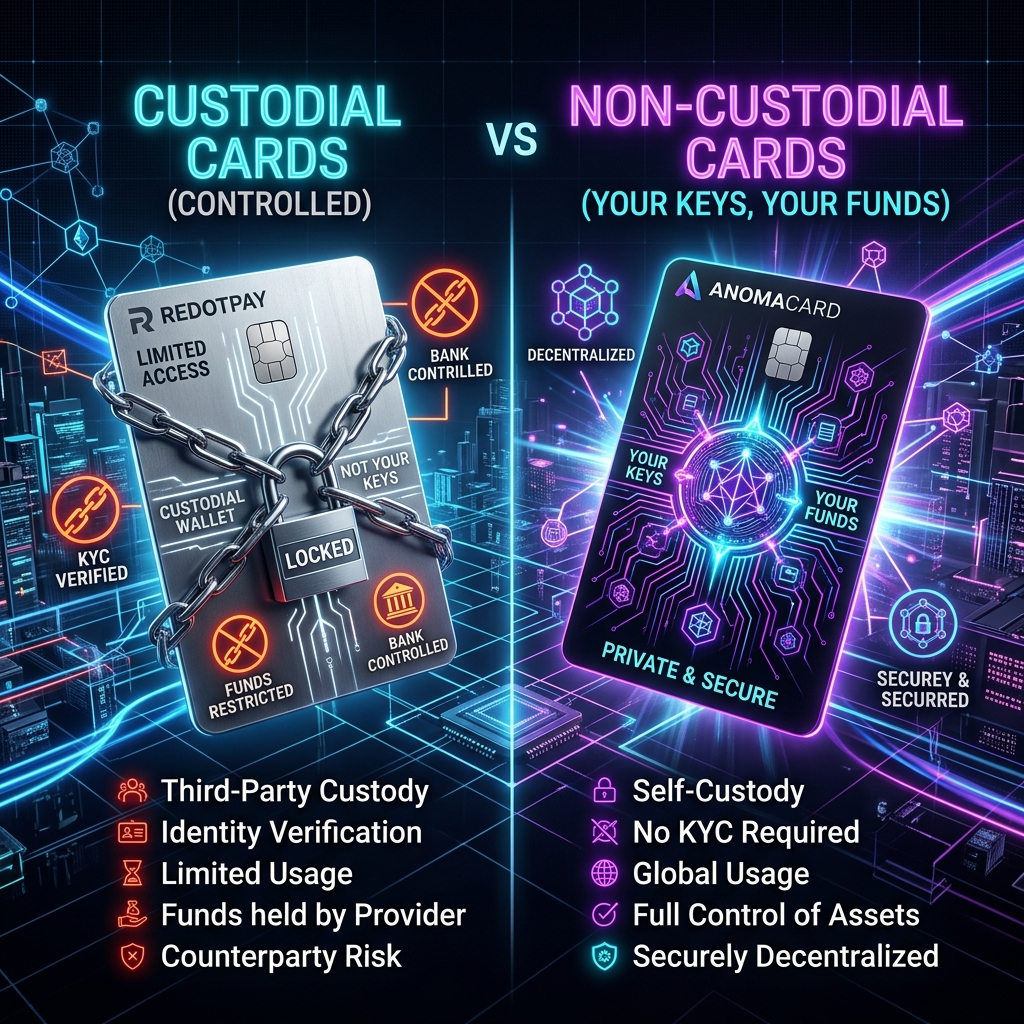
Many traditional crypto cards require users to deposit their funds into a custodial wallet controlled by the card issuer. While this might seem convenient, it introduces significant risks. When you use a custodial card, you do not own your private keys. The provider has the authority to freeze your account, confiscate assets, or report your transactions. Additionally, these platforms are subject to strict regulatory compliance, requiring invasive Know Your Customer (KYC) checks that demand passports and biometric data. This custodial model defeats the purpose of using cryptocurrency; you simply trade traditional banking surveillance for crypto-branded surveillance.
A non-custodial crypto card like AnomaCard offers a completely different approach. With AnomaCard, you retain ownership of your assets until the exact moment you decide to load them onto your virtual card. By integrating with decentralized wallets like MetaMask on Arbitrum or Phantom on Solana, you maintain full custody of your funds. There is no central entity that can freeze your wallet. When you fund your card, the transition from crypto to fiat is handled instantly, protecting your privacy and giving you absolute control over your financial sovereignty.
How to Fund Your Virtual Card with Near-Zero Gas
Funding your virtual AnomaCard using Arbitrum or Solana is a simple, efficient process. Because these networks are optimized for speed, your card will be loaded and ready for use in seconds.
Option A: Funding on Arbitrum (L2 Ethereum Rollup)
If you hold assets in the Ethereum ecosystem, Arbitrum is the most logical choice. Here is how it works:
- Prepare Your Wallet: Ensure your wallet (such as MetaMask) is set to Arbitrum One and contains the assets you wish to spend, like ETH, USDT, or USDC, along with a tiny amount of ETH for the L2 gas fee.
- Access the Dashboard: Log in to your private AnomaCard dashboard. No personal information or identity documents are required to access your account.
- Select Arbitrum: Choose the funding option and select Arbitrum. Specify the cryptocurrency and the amount you want to load.
- Confirm: The dashboard will generate a payment request. Confirm the transaction in your wallet. The gas fee will be extremely low, typically under $0.10. Within seconds, the transfer is confirmed, and your card is funded.
Option B: Funding on Solana (High-Speed L1 Alternative)
For the fastest and cheapest funding experience, Solana is unmatched. Follow these steps:
- Prepare Your Solana Wallet: Open your Solana wallet (such as Phantom) and verify you have SOL or USDC, along with a miniscule amount of SOL for transaction fees.
- Initiate Top-Up: Select Solana as the deposit network in the dashboard and enter the amount you wish to transfer.
- Confirm: Approve the transaction via your wallet. The fee on Solana is practically zero, usually less than $0.001.
- Instant Availability: Due to Solana's rapid block times, the transaction is finalized instantly, updating your balance immediately.
The Benefits of Near-Zero Gas for Daily Use
When transaction fees are reduced to pennies, the utility of a crypto card changes. Instead of planning large, infrequent deposits to justify the L1 gas fee, you can fund your card on an as-needed basis. If you want to buy a coffee for $4, you can load exactly $4 onto your card via Solana or Arbitrum without worrying that transaction fees will double the cost. This enables micro-funding, allowing you to keep the vast majority of your capital in secure, non-custodial wallets until the moment of consumption. This minimize-to-spend strategy is the safest way to manage your crypto, combining cold storage security with the convenience of a modern debit card.
Conclusion: Embrace the Future of Crypto Payments
The era of paying high fees and sacrificing privacy to spend crypto is over. By combining the low-cost efficiency of Arbitrum and Solana with the privacy-first, non-custodial architecture of AnomaCard, you enjoy the best of both worlds. Spend your digital assets anywhere card payments are accepted, enjoy near-instant transaction speeds, and pay fees that are practically negligible. Take control of your financial freedom today, bypass the custodial traps, and experience how easy it is to spend crypto without the gas tax.
Ready to spend crypto with near-zero gas?
Order Your Anonymous Card NowAnomaCard Protocol
Verified ResearchPublished by the AnomaCard Research Protocol. Focused on decentralized financial privacy, self-custodial architecture, and zero-KYC payment solutions.