Tangem Pay, Holyheld & Bitget Card Alternatives: Spend Crypto Without KYC or DAC8 Tracking (2026)
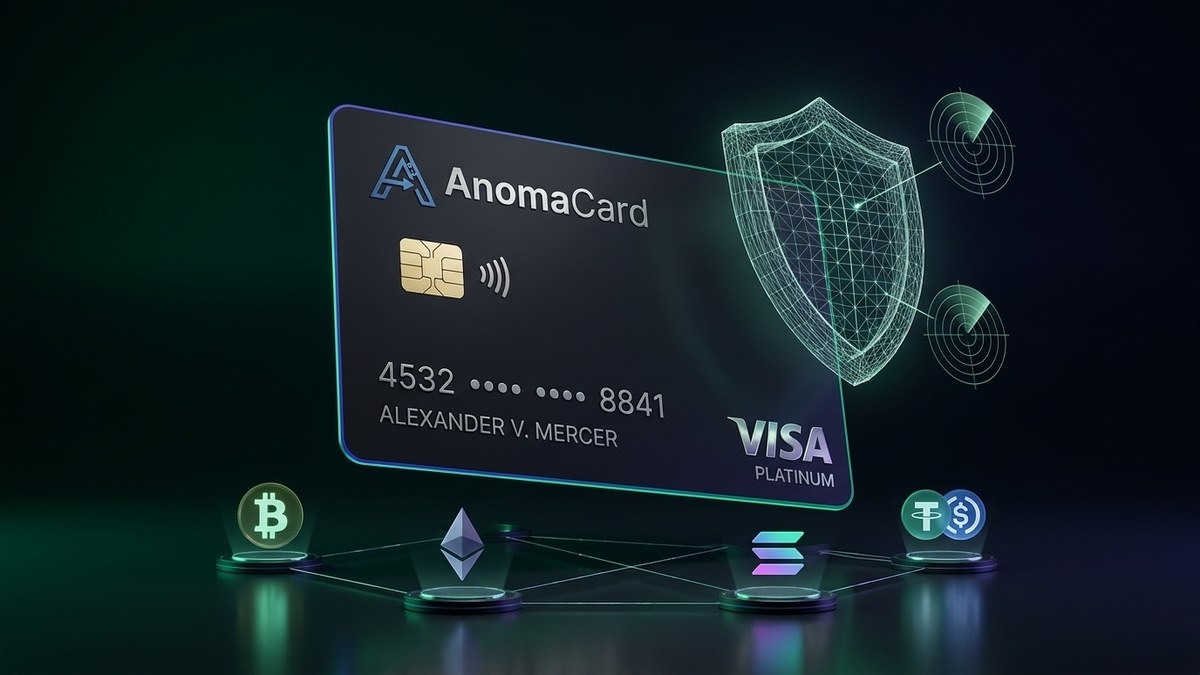
Executive Summary (2026 Update): Since January 1, 2026, the European Union's DAC8 directive and the OECD's global CARF (Crypto-Asset Reporting Framework) legally require regulated crypto card issuers—including Tangem Pay (via Baanx/Kulipa), Holyheld, Bitget Wallet Card, and Solayer Pay—to collect your Tax Identification Number (TIN), verify your biometric passport, and automatically report every crypto-to-fiat card transaction and linked wallet address to national tax authorities. If you want to spend Bitcoin, Ethereum, Solana, USDT, or USDC globally via Apple Pay and Google Pay without doxxing your hardware or Web3 wallet, AnomaCard provides an instant, 100% zero-KYC virtual Visa Platinum card with isolated non-custodial funding vaults.
Why Hardware & Web3 Wallet Users Are Searching for Tangem Pay, Holyheld & Bitget Card Alternatives in 2026
Throughout 2025 and 2026, a massive wave of hardware wallet and DeFi users migrated away from centralized exchanges (CEXs) like Binance and Bybit toward self-custodial wallets such as Tangem, Ledger, Rabby, Phantom, and Bitget Wallet. Naturally, when these ecosystems announced native Visa and Mastercard integrations—most notably Tangem Pay, Holyheld, Bitget Wallet Card, and Solayer Pay—users assumed they could finally tap-to-pay at physical terminals while preserving the financial privacy of cold storage.
Instead, users encountered an aggressive compliance trap. Because these "Web3 cards" rely on regulated European, UK, or US electronic money institutions (EMIs) and CASP banking rails at the point of settlement, activating the card forces you through invasive third-party KYC/AML onboarding (Sumsub, Persona, or Veriff). Worse yet, the moment you authorize a smart-contract allowance or transfer funds from your Tangem ring, Ledger Nano, or Solana wallet to the card's smart contract, your entire historical and future on-chain net worth is permanently linked to your government passport and tax ID.
What Changed on January 1, 2026? How DAC8 and OECD CARF Affect Crypto Debit Cards
To understand why privacy-conscious investors are abandoning regulated Web3 cards in 2026, you must examine the two sweeping surveillance frameworks that entered into full legal force on January 1, 2026:
- EU DAC8 (Directive on Administrative Cooperation – 8th Amendment): DAC8 mandates that every Crypto-Asset Service Provider (CASP) serving European Union residents—regardless of where the company itself is incorporated—must collect verified identity documents, residential addresses, and Tax Identification Numbers (TIN). Every time you tap your regulated crypto card at a supermarket, hotel, or online checkout, the underlying crypto-to-EUR/USD liquidation is logged as a reportable disposal event and transmitted automatically to your national tax authority.
- OECD CARF (Crypto-Asset Reporting Framework): Operating alongside DAC8 across more than 50+ global jurisdictions (including the UK, Switzerland, APAC, and LATAM partner nations), CARF standardizes the automatic cross-border exchange of crypto transaction data, including transfers to and from unhosted (self-custodial) wallets.
- The Cold-Wallet Clustering Risk: When you connect a Tangem wallet, MetaMask address, or Solana keypair directly to a KYC-verified card protocol like Tangem Pay or Holyheld, blockchain analytics firms immediately tag that unhosted wallet cluster with your legal identity. Every DeFi swap, liquidity pool position, and cold-storage transfer associated with that wallet loses its pseudonymity forever.
Architectural Teardown: Tangem Pay vs. Holyheld vs. Bitget Wallet Card vs. Solayer Pay
Before choosing a crypto spending card in 2026, it is essential to look past marketing slogans like "non-custodial card" and inspect how each platform actually handles identity verification, network restrictions, and transaction telemetry:
1. Tangem Pay (Cold-Storage Convenience vs. Mandatory Baanx/Visa KYC)
Tangem Pay integrates a virtual Visa card directly inside the Tangem mobile app, allowing users of Tangem cards and rings to top up a payment smart contract. However, Tangem does not issue the card itself—it operates through regulated EMI partners that enforce strict biometric KYC (passport scan, live facial liveness check, proof of residential address, and TIN disclosure). Furthermore, Tangem Pay restricts funding primarily to USDC on the Polygon network, forcing Bitcoin, Solana, and Ethereum Mainnet holders to bridge assets before spending, while permanently linking their Tangem hardware wallet addresses to a centralized identity dossier.
2. Holyheld (EUR IBAN Utility vs. Full DAC8 Identity Exposure)
Holyheld has gained popularity among European DeFi users by offering a personal EUR SEPA IBAN alongside a Mastercard/Visa debit card that can be funded from multiple EVM chains and Solana. Yet because Holyheld provides a regulated European bank account (IBAN) in your legal name, it is subject to the strictest tier of EU MiCA, Travel Rule, and DAC8 reporting. Every wallet address you connect to Holyheld is registered as a verified counterparty, and non-EUR transactions or on-chain top-ups incur layered protocol and FX conversion fees.
3. Bitget Wallet Card (Web3 Super-App Wrapper Around Custodial Compliance)
Following the tightening of exchange regulations, Bitget shifted promotion toward the Bitget Wallet Card. While integrated into a non-custodial mobile wallet interface, the card module itself is a custodial Visa/Mastercard product requiring full Level-2 identity verification, nationality screening, and strict geographic eligibility. Users in dozens of countries face sudden account freezes, rolling monthly compliance reviews, and 1.5%–2.0% effective conversion spreads when spending outside USD/EUR base currencies.
4. Solayer Pay (Solana sUSD Restaking Yield vs. Identity Lock-In)
Solayer Pay targets Solana ecosystem users by allowing them to spend yield-bearing stablecoins (such as sUSD) while earning on-chain restaking rewards. However, accessing the Visa card rail requires full KYC onboarding, exposes funds to smart-contract restaking risks, and ties your primary Solana DeFi wallet (Phantom/Solflare) directly to centralized card-processor logs.
2026 Comparison Matrix: AnomaCard vs. Tangem Pay, Holyheld, Bitget Card & Solayer
The table below compares the real-world architecture, privacy guarantees, supported networks, and fee structures of the top 2026 Web3 debit cards:
| Feature / Metric | Tangem Pay | Holyheld | Bitget Wallet Card | Solayer Pay | AnomaCard Protocol |
|---|---|---|---|---|---|
| KYC & Tax ID (TIN) | Mandatory ID + Selfie + TIN | Strict EU Video KYC + TIN | Full Passport + Selfie KYC | Mandatory Identity Check | 100% Zero-KYC (No ID / No TIN) |
| DAC8 / CARF Wallet Linking | Links Cold Wallet to Real Name | Full EU IBAN & CASP Reporting | Centralized Exchange Telemetry | Links Solana Wallet to KYC ID | Isolated Zero-Log Crypto Vaults |
| Supported Crypto Rails | Polygon USDC Only | EVM Chains & Solana | USDT / USDC / Multi-Chain | Solana (USDC / sUSD) | Native BTC, ETH, SOL, USDT & USDC |
| Card Issuance Speed | 1–3 Days (Compliance Review) | Hours to Days (KYC Queue) | 24–72 Hours Approval | Waitlist + KYC Verification | Instant (< 60 Seconds) |
| Activation & Top-Up Cost | Bridge Gas + FX Spread | Card Issuance Fee + Top-Up % | 1.5%–2.0% FX / Conversion | Tiered Plan Fees | $0 Activation Fee (0.3%–0.6% Top-Up) |
| Apple Pay & Google Pay | Supported (Selected Regions) | EEA & UK Only | Region-Restricted | Selected Jurisdictions | Global Provisioning (180+ Countries) |
How to Spend from Your Hardware or Web3 Wallet Without Doxxing Your Address
If you hold funds on a Tangem card/ring, Ledger, Trezor, Rabby, or Phantom wallet, your highest security priority in 2026 should be cryptographic compartmentalization—never signing a direct smart-contract allowance between your primary cold storage and a KYC-regulated card issuer.
Here is the exact 3-step architecture that AnomaCard uses to keep your hardware wallet 100% isolated from identity databases:
- Pseudonymous Registration (Email or Zero-Knowledge Web3 Signature): Create your AnomaCard account in seconds without uploading a passport, driver's license, utility bill, or Tax Identification Number (TIN). Your virtual Visa Platinum BIN (4532) is reserved immediately.
- Generate Dedicated Non-Custodial Funding Vaults: Inside your encrypted dashboard, click to derive your personal deposit address for Bitcoin (BTC), Ethereum (ETH / ERC-20 USDT & USDC), or Solana (SOL / SPL USDT & USDC). Send a minimum initial deposit of $50 USD from your Tangem, Ledger, or Phantom wallet.
- 100% Spendable Balance & Instant Apple Pay / Google Pay Unlock: There is $0 activation fee—all $50 of your first deposit is credited directly to your spendable USD card balance. Your full 16-digit Visa Platinum card number, CVV, real-time Freeze/Unfreeze controls, and in-dashboard 3D-Secure (3DS) OTP verification unlock automatically.
Best Practices for Privacy-First Crypto Spending in the DAC8 Era
Whether you are a digital nomad, a Web3 developer paying for cloud infrastructure (AWS, Hetzner, Vercel) and AI subscriptions, or a long-term holder paying for everyday groceries and flights via Apple Pay, following three operational hygiene rules ensures maximum transaction approval rates and financial sovereignty:
- Never Fund Any Card Directly from a Centralized Exchange: Withdrawing directly from Binance, Coinbase, or Kraken to any third-party payment rail triggers automated Travel Rule compliance questionnaires. Always route funds through your own self-custodial wallet (such as Phantom, Rabby, or Tangem) first.
- Use Native Multi-Chain Deposits Instead of Forced Bridges: Unlike Tangem Pay (which forces you onto Polygon USDC) or Gnosis Pay (which requires bridging to Gnosis Chain EURe), AnomaCard accepts native Bitcoin, Ethereum Mainnet, and Solana SPL stablecoins directly—eliminating cross-chain bridge exploits and unnecessary swap taxes.
- Keep Card Balances Modular: Treat your virtual Visa Platinum card like a physical cash wallet—top up your card vault with the amount you plan to spend over the week or month while keeping the majority of your net worth in offline hardware cold storage.
Protect Your Hardware Wallet from DAC8 & KYC Surveillance
Issue your AnomaCard virtual Visa Platinum in under 60 seconds. Fund directly from Tangem, Ledger, Phantom, or MetaMask with a $50 minimum deposit ($0 activation fee) and pay worldwide via Apple Pay & Google Pay.
Launch Your Zero-KYC Visa Card →Frequently Asked Questions (FAQ)
Does Tangem Pay require KYC and report under DAC8 in 2026?
Yes. Although the Tangem hardware wallet itself is non-custodial, activating Tangem Pay requires full identity verification (passport/ID scan, selfie, proof of address, and Tax ID) via its regulated card issuer partner, making all card top-ups and transactions reportable under EU DAC8 and OECD CARF rules.
Is Holyheld anonymous or exempt from European crypto reporting?
No. Because Holyheld issues a personal European EUR IBAN and regulated debit card, users must complete full KYC verification. Every wallet address connected to Holyheld is permanently linked to your verified legal identity and tax residency.
How can I spend crypto from my Tangem or Ledger wallet without KYC?
Instead of activating an in-app KYC card that doxxes your hardware wallet address, send BTC, ETH, SOL, USDT, or USDC from your Tangem or Ledger wallet to your dedicated non-custodial deposit vault on AnomaCard. Your virtual Visa Platinum activates immediately with a $50 deposit and zero identity documents.
Is the $50 minimum deposit on AnomaCard a fee?
No. AnomaCard charges $0 for card issuance and activation. Your $50 minimum first deposit remains 100% yours as spendable USD balance on your virtual Visa Platinum card and can be spent globally or withdrawn at any time.
Can I add AnomaCard to Apple Pay and Google Pay without showing my real name?
Yes. Once activated with your $50 deposit, your 16-digit Visa Platinum PAN and CVV can be added directly to Apple Wallet and Google Wallet across 180+ countries using any international cardholder persona (such as "AnomaCard" or "Alexander V. Mercer").
AnomaCard Research Team
Verified ResearchPublished by the AnomaCard Research Protocol. Focused on decentralized financial privacy, self-custodial architecture, and zero-KYC payment solutions.