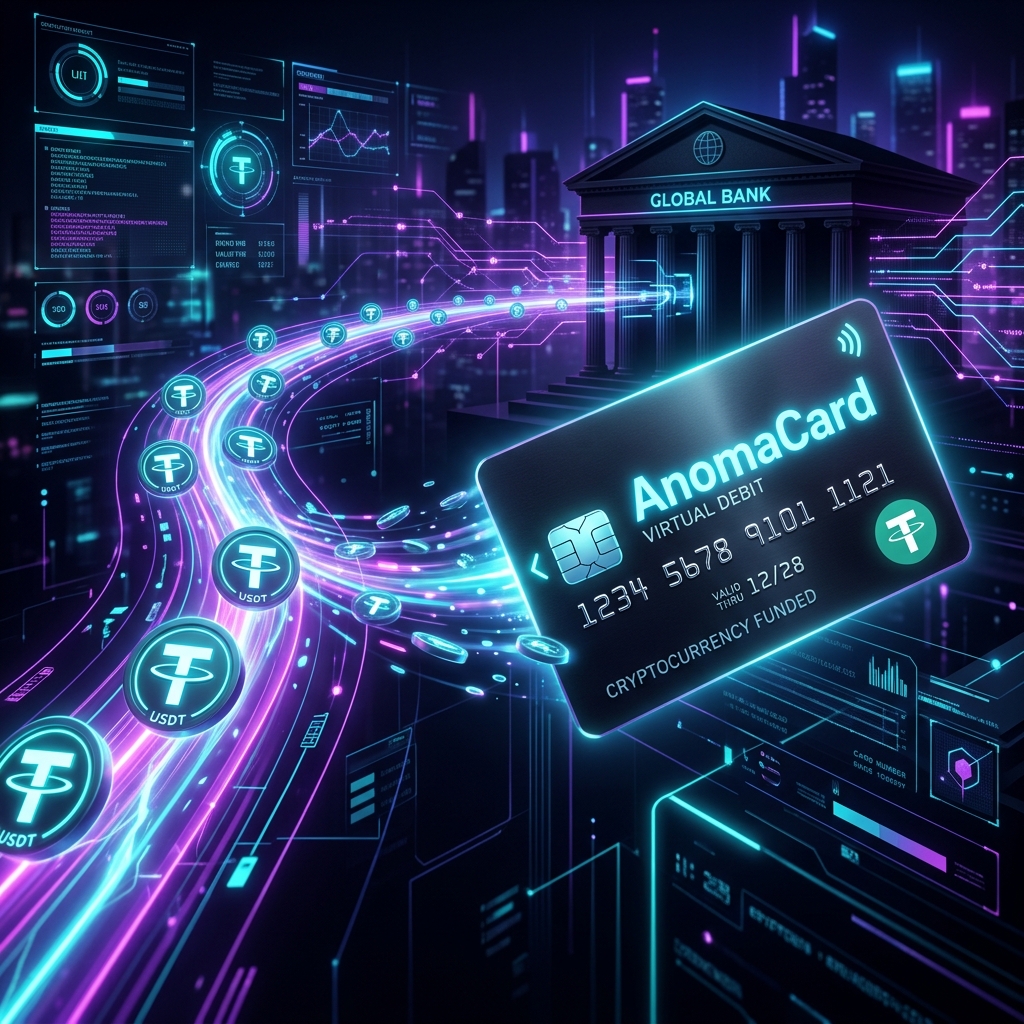
How to Spend USDT & USDC in the Real World: The Ultimate Guide to KYC-Free Virtual Debit Cards (2026)
The Volatility Dilemma: Why Paying with Bitcoin & Ethereum Still Stalls Daily Adoption
For over a decade, decentralized cryptocurrency promised to liberate global citizens from inflationary fiat currencies and banking monopolies. Yet, when ordinary crypto holders attempt to use digital assets for everyday transactions—such as buying coffee, paying for SaaS subscriptions, or grocery shopping—they immediately encounter the friction of extreme price volatility. Spending an asset like Bitcoin (BTC) or Solana (SOL) creates psychological anxiety: spending 0.005 BTC on dinner today means acute regret if Bitcoin rallies 15% tomorrow. Conversely, merchants refusing to adopt crypto cite violent price swings that make pricing goods nearly impossible.
Furthermore, in many jurisdictions, spending fluctuating cryptocurrencies directly triggers complex capital gains taxation events on every single purchase. To achieve true financial sovereignty without administrative headaches, the global decentralized economy needed a stable bridge: dollar-pegged stablecoins like Tether (USDT) and USD Coin (USDC). However, holding stablecoins in a private Web3 wallet does not solve the final mile. How do you swipe or tap stablecoins at a local point-of-sale terminal or checkout online without submitting your passport to centralized exchange surveillance? The answer lies in non-custodial, zero-KYC virtual stablecoin debit cards.
The Rise of Stablecoin Cards: Turning USDT & USDC into Universal Purchasing Power
Stablecoins have evolved into the lifeblood of decentralized finance (DeFi), processing trillions of dollars in annual transaction volume. Tether (USDT) offers the deepest global liquidity across exchanges and peer-to-peer markets, while USD Coin (USDC) provides institutional-grade reserve transparency audited by major public accounting firms. When tied directly to international Visa and Mastercard payment networks, these digital dollars transform into universal purchasing power accepted at over 80 million merchants worldwide.
A virtual stablecoin debit card acts as a real-time bridge. Instead of navigating slow bank transfers or waiting days for peer-to-peer wire settlements, users load USDT or USDC directly into a non-custodial smart contract infrastructure. The moment you initiate an online checkout or tap your smartphone against a card reader, the exact fiat dollar equivalent is settled instantaneously, while remaining funds stay safely under your personal control. There are no surprise conversion losses, no 3% foreign exchange fees, and zero risk of declined payments from market crashes.
Multi-Chain Flexibility: Funding via Ethereum (ERC-20) vs. Solana (SPL)
One of the primary historical bottlenecks preventing seamless crypto card spending has been blockchain network fragmentation and variable gas fees. Early crypto debit cards forced users onto specific, expensive network rails. Today, modern payment protocols support multi-chain architecture, allowing users to choose the optimal blockchain environment for their immediate transactional needs:
- Ethereum (ERC-20): Ethereum remains the undisputed institutional powerhouse of decentralized finance. High-net-worth individuals, crypto funds, and decentralized organizations hold immense liquidity in ERC-20 USDT and USDC. For substantial card top-ups ($1,000 to $20,000), Ethereum provides the highest security guarantees and deepest liquidity pools globally.
- Solana (SPL): For rapid micro-deposits, frequent top-ups, and everyday budgeting, Solana has emerged as the premier high-performance blockchain. SPL token transfers settle in under 400 milliseconds with network fees averaging a fraction of a cent ($0.0005). Funding a virtual debit card with SPL USDT or SPL USDC allows you to top up $50 on the go without sacrificing 10% of your deposit to network congestion fees.
The Architectural Breakthrough of Unified Multi-Token Funding Addresses
Historically, funding a multi-currency crypto card required users to generate separate deposit addresses for every individual asset and token standard. Generating an address for ETH, another for USDT ERC-20, and yet another for USDC ERC-20 created dangerous user friction; sending the wrong token to an incompatible smart contract address frequently resulted in irreversible fund loss.
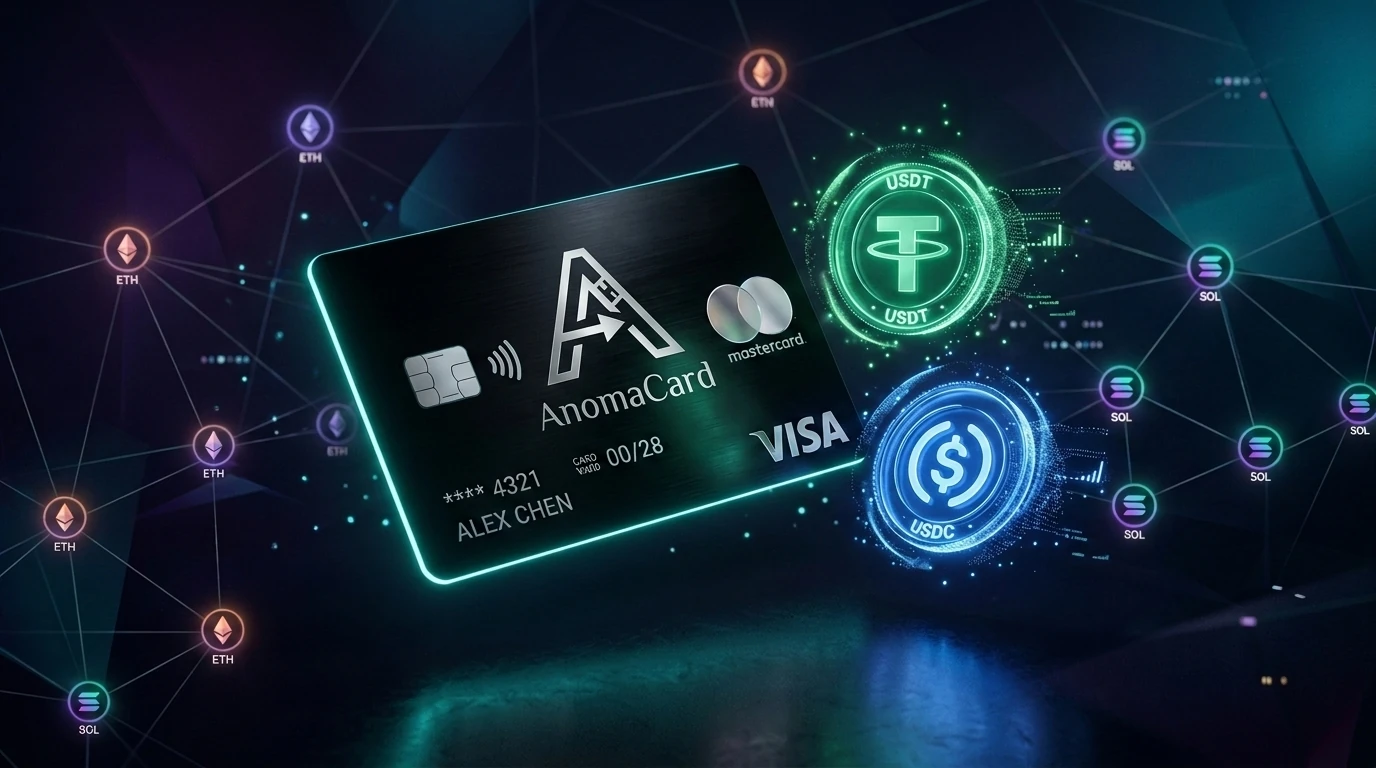
Modern protocols like AnomaCard eliminate this friction through unified multi-token deposit addresses. When you generate an Ethereum funding wallet, that single EVM-compatible address natively detects, processes, and credits incoming deposits whether you send native Ethereum (ETH), Tether (USDT ERC-20), or USD Coin (USDC ERC-20). Similarly, your generated Solana address automatically receives and parses native SOL, SPL USDT, and SPL USDC without requiring manual token account initialization. The protocol monitors on-chain confirmations, updates your live dashboard balance, and instantly unlocks your card limits.
Contactless Tap-to-Pay: Integrating Stablecoins into Apple Pay & Google Pay
Virtual cards are no longer confined to desktop browser shopping. The true benchmark of everyday financial usability is mobile point-of-sale integration. Modern non-custodial virtual cards issue dynamic tokenized credentials compatible with Apple Wallet and Google Wallet within sixty seconds of blockchain confirmation.
By provisioning your virtual Visa or Mastercard into Apple Pay or Google Pay, you can leave your physical wallet at home. Whether you are buying groceries at a European supermarket, paying for fuel across the United States, or dining at a restaurant in Tokyo, you simply double-click your smartphone's power button and tap against the merchant's contactless terminal. The transaction routes seamlessly through the payment gateway, authenticates via biometric facial recognition or fingerprint scan, and settles instantly against your USDT/USDC deposit balance with 0% decline rates.
Comparing Payment Models: Centralized Exchange Cards vs. Anonymous Web3 Cards
Understanding the difference between legacy custodial exchange cards and privacy-preserving Web3 cards is essential for maintaining financial independence:
| Feature / Metric | Centralized CEX Cards | AnomaCard Protocol |
|---|---|---|
| KYC Verification | Mandatory passport, selfie & utility bill | 100% Zero-KYC / Web3 signature |
| Deposit Fees | 1.5% to 3.5% hidden spread | 0.30% - 0.60% transparent VIP rate |
| Freezing Risk | High (algorithmic compliance freezes) | Zero (self-custody withdrawal anytime) |
| Supported Chains | Restricted custodial internal transfers | BTC, ETH, SOL, USDT & USDC (Multi-Chain) |
Step-by-Step Tutorial: How to Spend USDT & USDC in Under 60 Seconds
Setting up your private virtual stablecoin debit card requires zero paperwork and takes less than a minute:
- Connect Your Private Web3 Wallet: Visit the AnomaCard Homepage and connect via MetaMask, Phantom, Rabby, or WalletConnect. No name, phone number, or email address is collected.
- Select Network & Copy Address: Navigate to your dashboard and select your preferred funding rail—Ethereum (ETH & ERC-20) or Solana (SOL & SPL). Copy the displayed deposit address.
- Transfer USDT or USDC: Send any amount of USDT or USDC from your personal wallet or exchange. After 1 network confirmation, your deposit is automatically reflected at 1:1 USD valuation in your total card balance.
- Reveal Virtual Credentials: Click to view your 16-digit card number, CVV security code, and expiration date directly in your encrypted session.
- Add to Apple Pay / Google Pay: Input your card details into your smartphone's digital wallet and begin spending online or in physical stores worldwide immediately.
Conclusion: The Future of Sovereign Spending is Stable
The convergence of dollar-pegged stablecoins with non-custodial virtual debit card infrastructure represents a watershed moment for financial privacy. By decoupling your purchasing power from volatile cryptocurrency price swings and intrusive banking surveillance, you gain complete autonomy over your wealth. Whether you hold USDT on Ethereum or USDC on Solana, spending your crypto in the real world has never been faster, safer, or more accessible. Take control of your daily financial transactions today.
Ready to Spend USDT & USDC Anywhere in the World?
Generate your instant virtual Visa or Mastercard backed by multi-chain stablecoins with zero KYC, lowest 0.3% deposit fees, and instant Apple Pay support.
Get Your Free Card Now →AnomaCard Protocol
Verified ResearchPublished by the AnomaCard Research Protocol. Focused on decentralized financial privacy, self-custodial architecture, and zero-KYC payment solutions.