The Digital Nomad Crypto Guide: How to Travel the World Without a Bank Account (2026)

For decades, international travel required navigating an exhausting labyrinth of centralized banking barriers. Global wanderers, remote professionals, and location-independent entrepreneurs routinely battled frozen debit cards, extortionate foreign exchange (FX) spreads, aggressive fraud triggers, and skimming risks. When crossing borders, traditional retail banks treat their own customers with suspicion. A sudden card swipe at an airport cafe in Bangkok, a co-working invoice billed from Lisbon, or an apartment deposit in Buenos Aires frequently triggers automated fraud flags that leave travelers stranded on foreign soil without access to their money.
By 2026, the convergence of decentralized finance (DeFi), borderless stablecoin settlements, and non-custodial virtual payment cards has inaugurated a new paradigm: traveling the globe entirely on cryptocurrency without legacy commercial bank accounts. Whether living as a full-time nomad across Southeast Asia, hopping European co-working hubs, or exploring Latin America, sovereign financial independence is now the most resilient, cost-effective, and secure way to fund an international lifestyle. In this guide, we dissect how modern nomads leverage self-custodial virtual debit cards, low-latency blockchains, and mobile tap-to-pay rails to spend crypto seamlessly worldwide without bureaucratic friction.
The Hidden Traps of Traditional Banking for International Travelers
To appreciate a crypto-first travel setup, one must inspect the structural inefficiencies in legacy banking networks. Swiping a domestic Visa or Mastercard abroad routes transactions through multiple clearing houses, each extracting an expensive toll.
First are foreign exchange markups and dynamic currency conversion (DCC) traps. Conventional banks advertise "low fees," but impose 2.5% to 4.5% conversion spreads over mid-market rates whenever spending outside your home currency. Over months of booking flights, dining out, and securing accommodations, these penalties siphon thousands of dollars from your budget. Furthermore, POS terminals abroad prompt travelers to pay in their "home currency" via DCC—a predatory mechanism applying hidden markups exceeding 7%.
Second are geographic account freezes and algorithmic surveillance. Traditional banks deploy rigid anti-fraud heuristics designed for domestic consumers. When a nomad's IP address and physical locations shift rapidly between countries, automated algorithms lock account access without warning. Resolving these locks demands lengthy calls to support numbers during distant business hours, leaving you unable to pay hotel bills or transit fares.
Finally, there is financial de-platforming and local banking inaccessibility. Opening a local bank account on a tourist visa is virtually impossible in most countries, requiring local residency, tax IDs, and physical leases. Freelancers earning global client income in USDT or USDC find themselves trapped, unable to bridge digital assets into daily purchasing power through local banks.
The Non-Custodial Architecture: How Sovereign Travel Cards Work
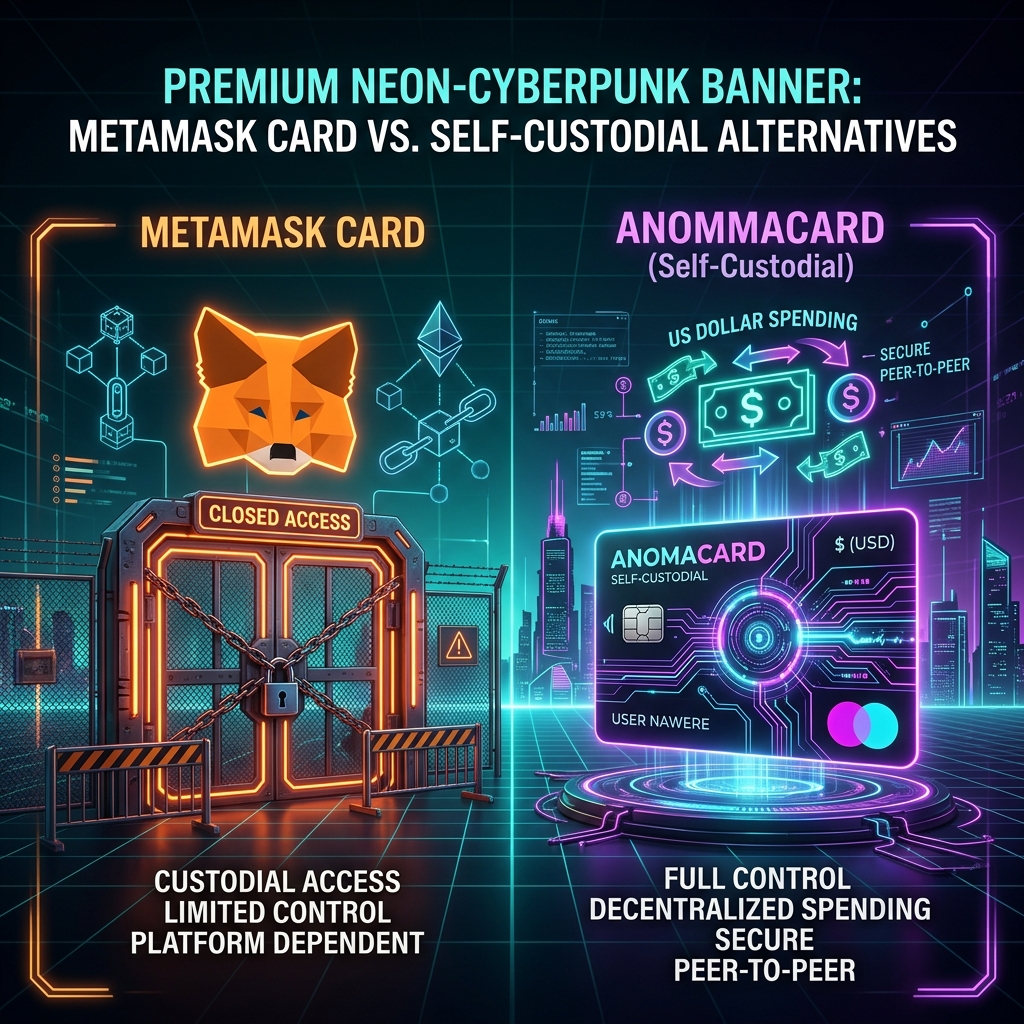
Modern nomads bypass this obsolete apparatus using non-custodial, zero-KYC virtual debit cards. Unlike custodial cards issued by centralized exchanges—which demand invasive passport scans, selfie biometric videos, and proof-of-address before freezing funds during compliance checks—sovereign cards operate on direct on-chain liquidity rails.
Under this self-custodial model, you retain absolute ownership of your private keys until the exact moment of top-up. You never store your primary savings on an exchange. Instead, capital remains secured in your personal cold-storage hardware wallet (Ledger, Trezor) or Web3 mobile interface (MetaMask, Rabby, Phantom). When liquidity is needed for travel expenses, you execute a peer-to-peer deposit of USDT, USDC, or SOL into your virtual card profile.
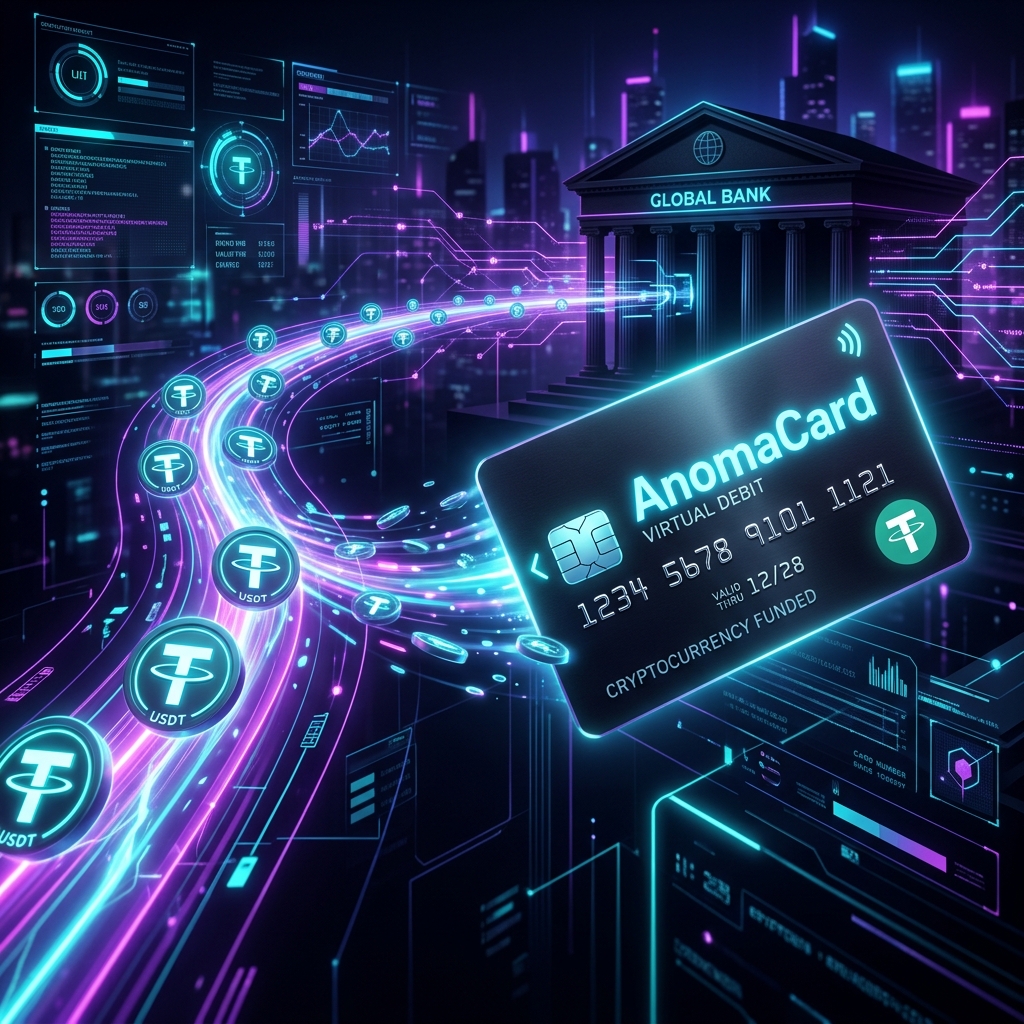
The virtual card is instantly issued with global network credentials (Visa or Mastercard) and provisioned directly into Apple Pay and Google Pay. Tapping your phone at an NFC terminal in a Tokyo subway or Parisian bistro clears transactions against your pre-funded stablecoin balance at genuine wholesale exchange rates. No personal identity documents are attached, shielding your passport and financial footprint from merchant data leaks and point-of-sale skimming.
Strategic Execution: A Step-by-Step Travel Blueprint
Establishing an airtight crypto travel setup requires intentional operational security and smart network selection. Here is the blueprint seasoned nomads use:
Step 1: Partitioning Your On-Chain Capital
Never connect your primary treasury wallet directly to commercial services or public Wi-Fi networks. High-level crypto security dictates strict wallet compartmentalization:
- Vault (Cold Storage): Stores your long-term savings, governance tokens, and multi-year runway. This hardware wallet never leaves your encrypted luggage or travel safe and never signs smart contracts on unfamiliar networks.
- Operating Buffer Wallet: A clean, non-custodial mobile wallet loaded with two to three weeks of projected living expenses, held predominantly in battle-tested dollar-pegged stablecoins like USDT and USDC.
- Disposable Card Funding: You generate virtual debit cards on demand with strict spending caps tailored to specific purposes—one dedicated card for recurring SaaS subscriptions (VPN, cloud storage, GitHub), another for lodging bookings (Airbnb, booking platforms), and a third linked to Apple Pay for daily tap-to-pay transactions.
Step 2: Leveraging Low-Fee Settlement Rails
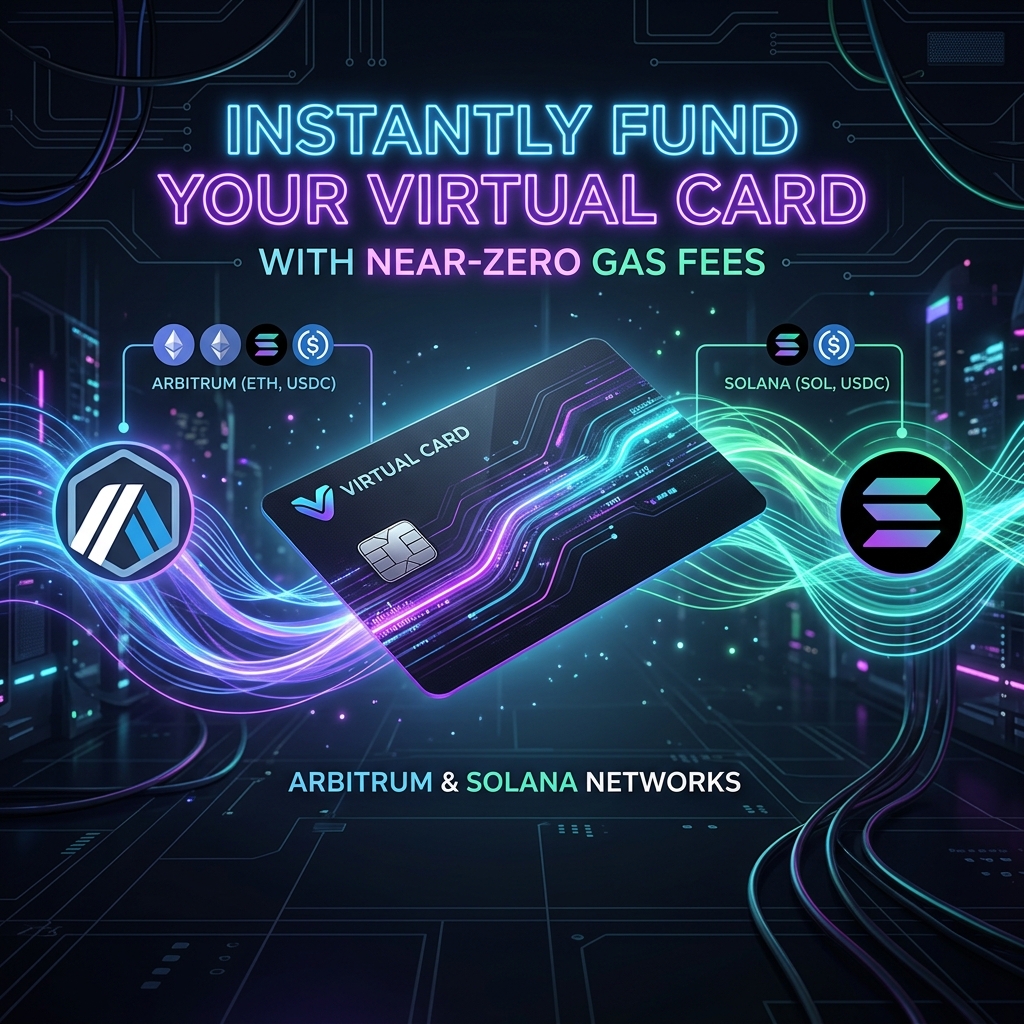
Funding debit cards on Ethereum Mainnet is economically illogical when gas fees can spike unexpectedly. Savvy nomads route their top-up transactions over high-throughput, sub-penny settlement layers such as Solana, Arbitrum, Base, or TRC-20 (Tron). Depositing $300 in USDT on Solana or Arbitrum incurs a network transaction fee of less than $0.01 and finalizes in seconds, ensuring you can instantly top up your virtual card while waiting in line at an airline check-in counter without enduring network congestion or paying $20 in gas.
Step 3: Mastering Contactless Mobile Payments
Physical plastic cards present significant security hazards while traveling: they can be physically stolen, cloned via magnetic stripe skimmers embedded in foreign ATMs, or lost in transit. By provisioning your virtual card directly into Apple Wallet or Google Wallet, your genuine 16-digit card number is permanently encrypted. Every transaction generates a dynamic, one-time security cryptogram (tokenization), making it mathematically impossible for malicious merchants or compromised payment terminals to duplicate your card credentials.
Real-World Travel Expenses: What Can You Pay With Crypto?
A common misconception among newcomers is that traveling on crypto restricts you to niche merchants that explicitly advertise "Bitcoin Accepted Here." In reality, because non-custodial virtual cards settle on global Visa and Mastercard payment rails, virtually 99% of global merchant terminals accept your crypto instantly:
- Flights and Long-Distance Transit: Book directly through major commercial airline websites, rail portals, and regional low-cost carriers without rejection.
- Accommodation and Co-Living: Pay for boutique hotels, Airbnb reservations, co-living memberships (like Selina or Outpost), and long-term serviced apartments.
- Daily Sustenance and Dining: Tap your smartphone at grocery stores, local street food markets equipped with mobile POS terminals, specialty cafes, and high-end restaurants.
- Coworking and Cloud Infrastructure: Settle monthly desk passes, international mobile eSIM data packages (Airalo, Holafly), and business hosting suites without local credit checks.
Emergency Preparedness and Redundancy
True financial sovereignty demands rigorous redundancy. Seasoned travelers never rely on a single card or device. Always maintain multiple active virtual cards provisioned across secondary devices, and keep an offline encrypted backup of your recovery seed phrases. By removing commercial banks from your financial equation, you eliminate arbitrary account freezes, avoid predatory currency conversions, and reclaim absolute autonomy over your wealth anywhere on planet Earth.
Ready to Travel Without Banking Borders?
Generate your anonymous AnomaCard virtual debit card in under 60 seconds. Fund instantly with USDT, BTC, or SOL at just 0.3% deposit fee, link to Apple Pay or Google Pay, and spend freely across 180+ countries with zero KYC paperwork.
Create Your Virtual Card Now →AnomaCard Research Team
Verified ResearchPublished by the AnomaCard Research Protocol. Focused on decentralized financial privacy, self-custodial architecture, and zero-KYC payment solutions.