Binance & Bybit Card Alternatives: How to Spend Crypto Without Centralized Exchange KYC (2026)

For millions of crypto holders, centralized exchange (CEX) debit cards once represented the easiest path to off-ramping. The concept was simple: hold trading balances on Binance or Bybit, order a branded plastic card, and spend crypto at any store or supermarket. Yet between 2024 and 2026, shifting regulations turned that convenience into a restrictive reality. Centralized platforms cancelled card programs across continents, severed banking partnerships overnight, and imposed invasive surveillance tiers that conflict with the core ethos of decentralized finance.
When Binance ended European Visa card operations and Bybit mandated video biometric verifications while geoblocking broad jurisdictions, millions of active spenders were left stranded. If your card was deactivated, if your country was blacklisted, or if you refuse to upload passports and biometric scans to buy groceries, you are not alone. A major shift is underway: the rapid migration toward non-custodial, zero-KYC virtual debit cards. In this guide, we explore why CEX-backed cards fail under regulatory pressure and how sovereign alternatives let you spend crypto globally with complete privacy.
The Structural Flaws of Centralized Exchange Cards
To understand why alternatives are needed, examine the systemic flaws embedded within centralized exchange card models. Swiping a card issued by Binance or Bybit connects transactions to a heavily surveilled, custodial apparatus with multiple points of failure.
First is custodial risk and the threat of arbitrary fund freezes. The Web3 rule—"Not your keys, not your coins"—applies directly to exchange cards. Spending requires holding funds in centralized custody. If an exchange faces regulatory actions or triggers automated AML filters, accounts lock without warning. Legitimate users routinely face frozen balances for weeks simply because an incoming transaction triggered automated risk thresholds.
Second is invasive identity surveillance and data aggregation. Centralized platforms operate under strict regulatory licensing. Obtaining or keeping a card requires passport scans, facial biometric video checks, utility bills, and wealth proof. Every transaction—from fuel to online subscriptions—is logged in centralized databases, tied to your real identity, and shared with tax authorities under standards like the OECD's CARF. Handing over sensitive biometric and financial profiles creates serious data breach risks.
Finally, CEX cards suffer from unstable banking partnerships. Exchanges rely on third-party issuers (such as Contis or Solaris). When regulatory scrutiny increases, partners terminate agreements abruptly. European users saw their Binance cards turned off overnight; Bybit cards remain unavailable across dozens of countries. Relying on centralized exchanges for everyday liquidity is inherently fragile.
The Non-Custodial Solution: How Self-Custodial Cards Work
The modern alternative is the non-custodial, decentralized virtual debit card protocol. Rather than depositing savings into an exchange and surrendering personal privacy, sovereign protocols separate your assets from payment terminals.
Under this self-custodial model, crypto stays permanently in your custody—secured in hardware wallets (Ledger, Trezor) or Web3 extensions (MetaMask, Rabby, Phantom). You retain full control of your private keys. When spending, you transfer the required amount in stablecoins (USDT, USDC) or native assets (SOL, BTC, ETH) directly to your virtual card profile on-chain.
The protocol issues an instant virtual Visa or Mastercard compatible with Apple Pay and Google Pay. Adding the card to your smartphone wallet enables contactless payments at 100+ million merchant terminals globally and online checkouts, bypassing traditional banking gatekeepers and exchange surveillance.
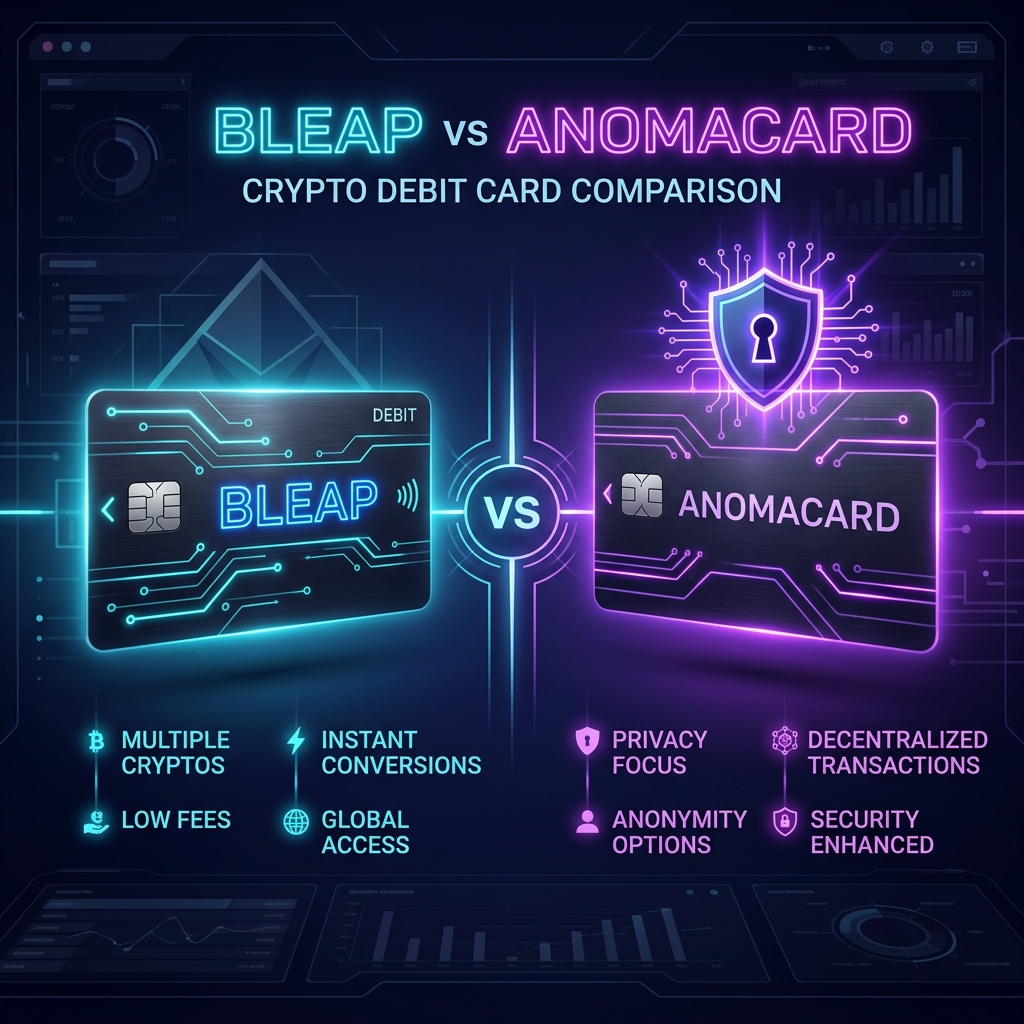
Detailed Comparison: Centralized Exchange Cards vs. AnomaCard
To illustrate the tangible advantages of transitioning to a sovereign off-ramp, consider the operational contrasts between traditional CEX cards and AnomaCard:
1. Identity Verification and Privacy
Binance and Bybit require Level 2 identity verification, including biometric facial scans, government ID verification, and proof of physical residence. In stark contrast, AnomaCard operates with zero KYC requirements. You connect seamlessly using your decentralized Web3 wallet. No name, no passport number, and no personal documents are ever requested or stored on our servers.
2. Custodial Control and Fund Safety
With Bybit or Binance, your assets are held in custodial hot wallets subject to corporate seizure, bankruptcy freezes, or withdrawal suspensions. With AnomaCard, you practice 100% self-custody. You only fund the exact dollar amount you intend to spend. Your primary treasury remains offline in cold storage, insulated from third-party counterparty risk.
3. Multi-Chain Settlement and Gas Efficiency
Traditional exchange cards often lock you into proprietary exchange ledgers or impose high internal conversion spreads. AnomaCard supports direct, ultra-fast top-ups across the world's most efficient settlement networks, including Solana, Arbitrum, Base, and Tron (TRC-20). With an industry-low deposit fee of just 0.3%, you can fund your card for pennies in network fees and achieve instant finality in seconds.
4. Global Accessibility Without Regional Blacklists
While centralized exchange card programs are routinely shut down across Europe, Latin America, and emerging markets, AnomaCard's decentralized virtual cards work globally wherever Visa and Mastercard are accepted. Whether traveling, freelancing remotely, or managing online business expenses, your access to global liquidity remains uninterrupted.
How to Transition Away from CEX Cards in 3 Simple Steps
Switching from a restricted centralized exchange card to a sovereign virtual card setup is straightforward and takes less than two minutes:
Step 1: Secure Your Funds in Self-Custody
Withdraw your trading balances and stablecoins from Binance or Bybit into a self-custodial wallet that you control. For maximum security, use a hardware wallet like Ledger or Trezor connected via Rabby or MetaMask, or a dedicated mobile Web3 wallet like Phantom.
Step 2: Generate Your Virtual Card
Navigate to AnomaCard, connect your Web3 wallet, and generate your virtual card. No paperwork, email confirmations, or identity uploads are involved. Your virtual card credentials are created instantly with customizable spending limits.
Step 3: Fund via Low-Fee Blockchain and Add to Apple/Google Pay
Transfer the desired deposit amount in USDT, USDC, or SOL using low-cost settlement layers like Arbitrum or Solana. Once the transaction confirms on-chain, provision the card into Apple Wallet or Google Wallet on your smartphone. You are now fully equipped to spend your crypto anywhere in the world with zero surveillance and instant execution.
Reclaiming Financial Sovereignty
The demise of centralized exchange card programs is not a setback; it is a vital catalyst for the maturation of decentralized finance. Relying on centralized intermediaries to spend decentralized money was always an ideological contradiction. By embracing non-custodial, zero-KYC virtual cards, you eliminate exchange counterparty risk, protect your personal privacy, and experience the true promise of cryptocurrency: frictionless, sovereign financial freedom anywhere on Earth.
Tired of CEX Card Freezes and Invasive KYC?
Switch to AnomaCard today. Generate an instant non-custodial virtual Visa/Mastercard in under 60 seconds with zero KYC, fund from any Web3 wallet at just 0.3% deposit fee, and spend globally with Apple Pay and Google Pay.
Get Your Anonymous Card Now →AnomaCard Research Team
Verified ResearchPublished by the AnomaCard Research Protocol. Focused on decentralized financial privacy, self-custodial architecture, and zero-KYC payment solutions.